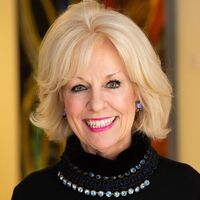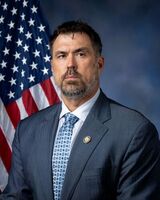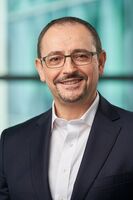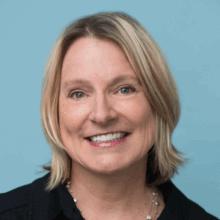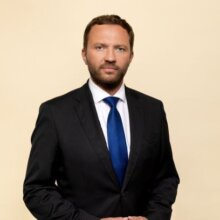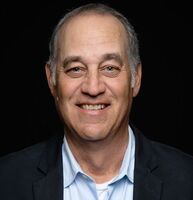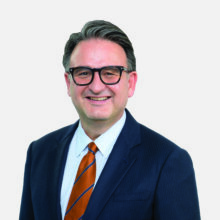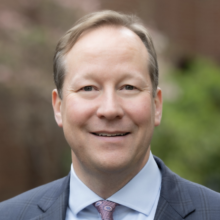

Welcome remarks to the 2026 Concordia Annual Summit.
As shifting dynamics in the Gulf continue to affect global energy markets and economic stability, the ripple effects are being felt well beyond the region. This fireside chat will explore how these changes could create an opening for Syria to reemerge as a global economic player through its access to the Mediterranean and its potential role in secure energy transit.
Baghdadi Capital is a programming partner for the 2026 Annual Summit.
2026 Concordia Annual Summit kicks off the day on the West Stage.
The Amazon is not only a conservation priority, but one of the world’s most strategic natural assets. This conversation will explore how innovative finance can translate the region’s environmental value into investable opportunities, sustainable economic development, and meaningful returns for local communities.
As markets absorb a shift in monetary policy and political uncertainty builds ahead of the midterms, this conversation examines how investors should be reading the current environment, and where opportunity still exists. What does a resumption of rate hikes signals for markets? Where is capital finding value amid uncertainty? And, what should disciplined investors should be doing right now? The conversation will also turn to a bigger structural question: how artificial intelligence is transforming investment management itself, from research and decision-making to the future of the industry at large.
Calamos is a sponsor of the 2026 Concordia Annual Summit.
As the United States confronts rising energy demand, global competition, and the need for greater economic resilience, policymakers face a critical question: what energy and environmental policies can deliver real results in the next Congress? In this conversation, Reps. Deborah Ross and Mike Levin will discuss the Thriving Economy Project, a new effort to develop pragmatic, actionable recommendations to strengthen American competitiveness, expand energy affordability and reliability, and accelerate the development of next-generation energy technologies. The conversation will explore what is politically and economically achievable—and how Congress can translate innovation into durable policy.
As geopolitical competition reshapes the global economy, supply chains have emerged as a central pillar of economic and national security. No longer mere logistical networks, they have become a key vehicle for industrial strength and long-term growth. Governments and industry are increasingly prioritizing export finance, strategic reserves, and public-private partnerships to secure critical inputs, reduce exposure to shocks, and remain competitive in a rapidly evolving landscape. This conversation will explore how coordinated investment and strategic collaboration can drive the shift beyond fragile, short-sighted models and lay the durable and diversified foundations that the industries of the future demand.
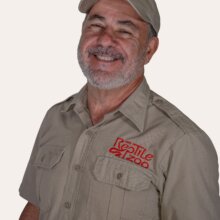
Jay Brewer has built a unique business and media empire by turning a lifelong passion for reptiles into an educational experience reaching audiences around the world. From founding Prehistoric Pets and The Reptile Zoo to building a massive digital following, Brewer has demonstrated how entrepreneurship, storytelling, and an authentic connection to an audience can transform an unconventional passion into a platform for education and impact. In this conversation, Brewer will share the lessons behind his unlikely journey, the power of creating experiences that inspire curiosity, and how entrepreneurs can turn what makes them different into what makes them successful.
Flagship Pioneering Founder and CEO Noubar Afeyan will join Patrick Temple-West of the Financial Times for a fireside chat on what it takes to turn unconventional ideas into transformative innovation. Drawing on decades of experience at the intersection of science, entrepreneurship, and investment, the conversation will explore how breakthrough ideas emerge, why challenging conventional wisdom is essential to progress, and what it takes to move bold scientific concepts from possibility to real-world impact. Together, they will consider the technologies and ideas poised to shape the future, and how innovation can help address some of the world’s most pressing challenges.
The Western Hemisphere is emerging as a central answer to the global concern on how to supply minerals in fast-growing demand while ensuring they generate value-added, sustained development and growth. Latin America and the Caribbean hold a significant share of these resources, creating an opportunity to deepen economic ties between the region and the United States while strengthening regional and global supply chains. Across the region, bilateral cooperation on mining, financing, and supply chain security has accelerated in recent months, with new agreements reshaping the landscape at a pace few anticipated even a year ago. This session will bring together regional heads of state, multilateral finance leadership, and senior US diplomacy to examine what a genuine hemispheric minerals alliance requires: where recent agreements are gaining real traction, where the distance between policy ambition and commercial reality remains wide, and what it will take to build supply chains resilient enough for the demands of the next decade.
Artificial intelligence is reshaping business and the information landscape. As entrepreneurs building tomorrow’s businesses make crucial technology choices today, Under Secretary of State for Public Diplomacy Sarah B. Rogers will discuss the importance of preserving freedom and innovation-forward tech policy and preview a new global AI initiative to make the trusted American AI tech stack accessible to more international entrepreneurs.
This timely fireside discussion with HUD Secretary Scott Turner will explore strategies for expanding affordable housing, cutting through red-tape, empowering Americans with self-sufficiency, and fostering private sector investment in underserved communities with Opportunity Zones. Through a discussion of innovative approaches, public-private partnerships, and policy leadership, attendees will gain insights into creating long-term solutions that address the everyday needs of Americans while strengthening communities and expanding economic opportunity.
For decades, a handful of institutions and a predictable stream of donor dollars quietly financed the world’s development agenda. That model is now breaking down in real time. Traditional aid budgets are shrinking even as global needs keep growing, and new sources of capital, from sovereign wealth to blended and private finance, are stepping in to fill the gap. This session will bring together leaders redefining how development gets financed and delivered, exploring which new models are already changing outcomes on the ground and what it will take to build an architecture built for the years ahead.
Amid today’s uncertainty, the dominant narrative is one of pessimism. But widen the lens and a more hopeful story emerges. Over the past 100 years, global income per person rose sixfold, extreme poverty fell sharply, and life expectancy nearly doubled. In A Century of Plenty: A Story of Progress for Generations to Come, McKinsey Global Institute researchers examine what powered that “progress machine,” while acknowledging its gains were unevenly shared. What would it take for everyone to reach the living standards of today’s most prosperous countries by 2100? The scale is immense: the global economy would need to grow more than eightfold. Is that realistic? Will there be enough energy, food, metals, and minerals? Can we innovate quickly enough and deliver that growth while protecting the planet? Drawing on the book’s research, this flash talk will offer a fact-based case for optimism and explore what it would take to turn the possibility of universal prosperity by 2100 into reality.
McKinsey Global Institute is a programming partner for the 2026 Annual Summit.
Traditional health models focus on the broken brain. This session introduces a new standard: proactive peak performance. Leaders from technology, the military, and science discuss how precision brain health secures the modern workforce, protects the warfighter, and ensures societal resilience in an age of AI.
The Center for Brain Health is a programming partner for the 2026 Annual Summit.
Addiction is the leading cause of death for Americans ages 18 to 44, yet it continues to be treated differently from other leading causes of death. In a candid, moderated conversation, Shatterproof CEO Pam Jenkins will join former NFL quarterback and recovery advocate Ryan Leaf to examine why a condition this deadly still isn’t treated as a true medical issue – by policymakers, by the private sector, or by the public. We’ll unpack the current policy dynamics in play alongside the broader cultural questions of shame and stigma.
In an era marked by polarization, declining trust, and growing social fragmentation, compassion is emerging as a powerful catalyst for meaningful change. Yet fostering empathy across differences requires more than good intentions: it demands intentional leadership, community engagement, and measurable action. Drawing on insights from the Muhammad Ali Index, the discussion will examine how compassion can be understood, measured, and translated into tangible outcomes that improve civic life.
With public pressure mounting and UN negotiations towards an international legally binding agreement to address plastic pollution underway, the world has an opportunity to forge one of the most consequential environmental agreements in decades. At the same time, the transition to a circular economy is creating new opportunities to redesign products, reduce waste, recycle more, and unlock more resilient and sustainable supply chains. This conversation examines the political, commercial, and cultural forces shaping the future of plastic pollution.
The International Council of Chemical Associations (ICCA) is a programming partner for the 2026 Annual Summit.
As Honduras enters a new political chapter under President Nasry “Tito” Asfura, the country is emerging as an increasingly important partner for the United States on security, migration, trade, investment, and regional stability. Against the backdrop of shifting political dynamics across Latin America and renewed U.S. engagement in the Western Hemisphere, Asfura’s government faces the challenge of strengthening Honduras’s economy while deepening its relationship with Washington. In this timely fireside conversation, President Asfura will examine the priorities of his new administration, the evolving U.S.–Honduras partnership, and Honduras’s role within a changing Central American and hemispheric landscape. The discussion will explore security and counternarcotics cooperation, migration, investment and economic ties, Honduras’s strategic position in Central America, and how the country can navigate growing competition and geopolitical change across the Western Hemisphere.
The United States is becoming the world’s factory floor for allied capital: Japan, Canada, Germany, South Korea, and the UK are pouring industrial investment into American manufacturing, semiconductors, EVs, and defense, building manufacturing capacity and jobs. With total inbound FDI stock now at $5.7 trillion and bilateral investment agreements with Japan and South Korea accelerating, Washington faces a strategic question: how do you convert allied capital into durable industrial policy outcomes?
One Region is a programming partner for the 2026 Annual Summit.
As we approach five years after Russia’s full-scale invasion reshaped European security, the war in Ukraine has exposed both the resilience and the fault lines of the Western alliance. As NATO confronts its most consequential strategic moment since the Cold War, the question is no longer whether Europe can defend itself — but whether it has the will, the weapons, and the unity to do so. In this high-level session, panelists will examine the accelerating drive toward defense modernization across NATO’s Eastern Flank, the reorientation of European energy infrastructure away from Russian dependency, and the political sustainability of Western support for Kyiv. With alliance cohesion under pressure and defense spending commitments being tested, the panel will address a defining question for the transatlantic community: Is NATO being made stronger by this crisis, or is it being pulled apart by it?
General Dynamics is a programming sponsor for the 2026 Concordia Annual Summit.
During most annual physical examinations, every significant organ is attended to – except for the brain. These pioneers predict a future where brain health metrics are as common as blood pressure checks. Explore how the integration of cognitive data into routine primary care will detect risks early, lower long-term costs for insurers, and empower individuals to own their mental longevity.
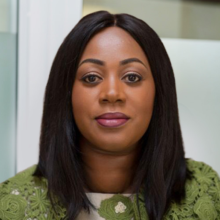
As the international development landscape shifts away from aid dependency, Ghana is putting country leadership at the center of how it works with international partners. This conversation explores what that means in practice: how national priorities can connect more effectively with philanthropic, private and catalytic capital, and what governments need to put in place to turn partnership into delivery. Drawing on Ghana’s experience and the emerging Accra Reset agenda, this session will discuss the institutional architecture Ghana is building, the opportunities for partnership, and what a different relationship between countries and international partners could look like in practice for Africa.
The Millennium Development Authority is a programming partner for the 2026 Annual Summit.
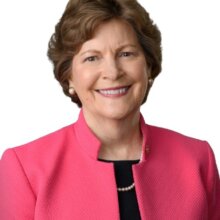
At a moment of profound change in the international system, this fireside conversation with Senator Jeanne Shaheen will explore the future of American leadership, alliances, and diplomacy. The discussion will examine how the United States can navigate a shifting transatlantic and Indo-Pacific landscape, the evolving role of Congress in shaping policy toward Russia and Ukraine, and the challenges of sustaining bipartisan approaches to foreign policy across administrations. Looking beyond today’s crises, the conversation will also consider the future of American diplomacy and the priorities that will shape U.S. foreign policy for the next generation.
In a time of shifting global dynamics and continental challenges, Southeast Europe is increasingly cementing its role as a vital anchor of geopolitical stability. This session explores how enhanced diplomatic alignment, economic integration, and strategic cooperation among regional partners contribute to a more secure and resilient Europe. Panelists will discuss the region’s potential to foster dialogue, drive sustainable development, and serve as a reliable bridge between East and West. Crucially, the discussion will highlight how Southeast Europe is safeguarding the continent’s energy security by diversifying supply routes, reducing external vulnerabilities, and protecting critical infrastructure to ensure long-term regional resilience. The Delphi Economic Forum is a programming partner for the 2026 Annual Summit.
Launched by First Lady Melania Trump at the 80th UN General Assembly, Fostering the Future Together (FTFT) is a global coalition bringing together First Spouses and equivalent leaders, the private sector, and other partners to help ensure children and young people can learn, grow, and thrive in the digital era. With more than 57 First Spouses and equivalent leaders and over 30 private-sector partners now engaged, the initiative demonstrates the potential of cross-sector collaboration to expand access to quality education while promoting safe, responsible, and innovative use of advanced technologies, including artificial intelligence. This panel will spotlight the next phase of FTFT, spotlighting First Lady of St. Kitts and Nevis Mrs. Diani Prince-Drew’s work and announcement about hosting a FTFT Regional Event in the Caribbean Region. The Panel will also highlight new public-private partnerships and commitments from leading technology companies, including Google and Intel, exploring how investment in the next generation can equip young people with the skills and opportunities to drive innovation, economic growth, stability, and prosperity for generations to come.
Young leaders are no longer just future stakeholders, they are active diplomatic actors shaping global discourse today. This session highlights the rise of youth diplomacy, from climate negotiations and peacebuilding to technology governance and global entrepreneurship. Participants will explore how institutions can meaningfully integrate youth voices, harness digital diplomacy, and empower the next generation to strengthen international cooperation.
Sughra Hussainy was born in Afghanistan, orphaned as a young girl, and survived the Taliban’s prohibition on art to a global stage at the Smithsonian. Her medium,traditional Afghan calligraphy and illumination, worked in pigments she grinds herself from lapis lazuli and madder root, is among the oldest living art forms in Central Asia, a direct thread to the great Persian manuscript ateliers of the medieval world, a testament to the resilience and beauty of Afghan culture. Shoshana Stewart, President of Turquoise Mountain, and Sughra Hussainy, one of the most celebrated artists to emerge from Turquoise Mountain’s Kabul Institute, will be in conversation about what it means to practice an endangered art form, what is lost when that practice is interrupted by war, and what it takes institutionally, personally, and commercially to keep it alive and pass it on.
Since its 2023 launch, the VaxSocial initiative has supported country-driven projects that use social media and behavioral science to build confidence around routine immunization. Hosted by Global Impact on behalf of Gavi and Advancing Health Online (AHO), the funders of VaxSocial, this event brings together government leaders, private sector partners, and global health leaders to take stock of what VaxSocial has shown about digital platforms and vaccine confidence, and to look ahead at what comes next.
In a world of deepening division, sport remains one of the few forces that moves freely across borders, cultures, and political fault lines. But its power as a diplomatic and economic instrument is only beginning to be fully understood. This session brings together the leaders who are putting that power to work, and asks what becomes possible when sport is treated not just as entertainment, but as one of the world’s most effective tools for global engagement.
Sughra Hussainy is one of the foremost living practitioners of Persian calligraphy and illumination, a tradition with roots in the manuscript ateliers of the medieval Islamic world and among the oldest continuously practiced art forms in Central Asia. Trained in Afghanistan, where the Taliban has banned music, sculpture, and figurative art, and where women have been squeezed out of nearly every public creative space. Grinding her own pigments from lapis lazuli and madder root, she works by hand with materials and methods largely unchanged for centuries, carrying the tradition from Kabul to institutions including the Smithsonian. In this live demonstration, watch her draw pigment and line by hand. A rare chance to see a centuries-old tradition practiced in real time and against odds.
As a key actor in the Gulf and wider Middle East, Qatar is navigating a rapidly shifting regional order shaped by the Iran-US confrontation, evolving GCC security priorities, and renewed efforts to address conflicts across the region. In this timely fireside conversation, Dr. Majed Al-Ansari will examine Qatar’s strategic position as a close US security partner, its role within the GCC, and its diplomatic efforts to reduce regional tensions. The discussion will explore the future of US-Iran negotiations, Gulf security, Qatar’s mediation role, and how Doha is positioning itself amid growing geopolitical uncertainty.
As economies compete to attract investment, expand critical industries, and strengthen their global competitiveness, access to skilled talent is becoming as important as capital and infrastructure. Yet employers across sectors face persistent workforce shortages, while traditional education and training systems struggle to keep pace with evolving industry needs. This conversation will examine how businesses, educators, governments, and communities can build stronger talent pipelines through apprenticeships, skills-based training, technical education, and lifelong learning – and what it will take to ensure the workforce is prepared for the industries and opportunities driving the next generation of economic growth.
What if being somewhere no longer required actually being there? In this interactive Studio Stage experience, Proto Hologram founder and CEO David Nussbaum will showcase how holographic technology is redefining presence across entertainment, business, communications, and live events. A celeb will beam into the stage live and in real time, demonstrating how people can transcend physical distance to participate in a shared experience, while an AI-powered William Shatner hologram will offer a glimpse into what comes next. The conversation will explore how live holographic presence, spatial computing, and AI are transforming the boundaries between physical and digital, and what it means for how we connect, communicate, and experience the world.
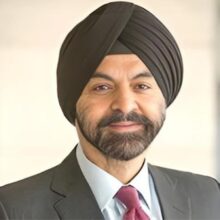
Over the next decade, 1.2 billion young people will reach working age in emerging markets, while only 420 million jobs are expected to be created. Closing that gap is one of the defining economic and geopolitical challenges of our time. World Bank Group President Ajay Banga will discuss what it takes to convert demographic growth into opportunity, from foundational investments and policy reform to mobilizing private capital at unprecedented scale, and why creating jobs must become the organizing principle for development.
As artificial intelligence reshapes how organizations operate, make decisions, and solve problems, the qualities that define exceptional leadership remain deeply human. The Medal of Honor Griffin Institute is investing in the next generation of leaders, recognizing that technology can enhance human potential but cannot replace the courage, character, judgment, empathy, and sense of responsibility required to lead. This conversation will explore what it means to develop leaders who can navigate uncertainty, build trust, make difficult decisions, and inspire others in an increasingly AI-driven world
This session will explore the shifting balance of power among journalists, lobbyists, and influencers, examining who is most effectively shaping public discourse in an era defined by reach and engagement. Are influencers functioning as journalists, advocates, or de facto lobbyists? Until recently, journalists and lobbyists played defined roles in shaping policy and public opinion, governed by ethical codes and regulatory frameworks. Today’s new media commands audiences that rival major news outlets, yet operates with minimal transparency requirements. Should transparency and disclosure standards apply equally across all platforms? And if influence is measured by reach and engagement, have influencers surpassed traditional media as the primary gatekeepers of political information?
The Armenia Project (TAP) is a programming partner for the 2026 Annual Summit.
When armed conflict destroys a mosque in Aleppo, uproots an olive grove in the West Bank, or silences a woodcarver in Kabul, the wound is more than architectural or agricultural. Cultural heritage, buildings, crafts, land, living tradition, is increasingly weaponized in conflict, targeted deliberately to erase identity, fracture communities, and foreclose peace. Yet a new generation of practitioners is proving that preservation is not passive. It is an act of sovereignty, economic development, and conflict resolution. From planting climate-smart olive groves on contested West Bank land, to restoring a historic city quarter in Kabul, to sending protective crates to Ukrainian museums within 24 hours of invasion, this session discusses heritage protection with the on-the-ground actors that are outpacing policy.
Seven in ten refugees are living in long-term displacement, many below the poverty line and reliant on humanitarian aid with no clear pathway forward. The challenge is no longer episodic. It is structural. Yet the frameworks governing response, investment, and international burden-sharing were built for a different era. This session brings together leaders from international institutions, the private sector, and the investment community to examine what durable solutions for displaced communities actually require, how capital and policy can work in concert, and what it will take to move from crisis response to lasting change.
More than 700 million people worldwide still lack access to reliable electricity, and the consequences extend far beyond darkness. For families living at the margins, the absence of light forecloses opportunity: children cannot study after sundown, small businesses cannot extend their hours, and women navigating informal economies have fewer tools to build financial independence. Solar energy, paired with financial literacy training and community-rooted empowerment, has emerged as a proven entry point into economic mobility. In this fireside conversation, Nancy Economou, Founder and CEO of Watts of Love, will share what it has taken to move from isolated impact to systemic change, and what still stands in the way of ending the cycle of generational poverty for good.
Watts of Love is a programming partner for the 2026 Concordia Annual Summit.
The stated destination of the current bilateral health agreements is national self-reliance: partner governments steadily increasing their own investment and ultimately running their own programs. It requires diagnostics that deliver more per test, data systems a health ministry can genuinely own and operate, and a definition of success both partners are willing to sign. This session brings together the architects of those agreements, the builders of the technology underneath them, and the institutions tracking whether ownership is taking hold.
Stop TB is a programming partner at the 2026 Concordia Summit.
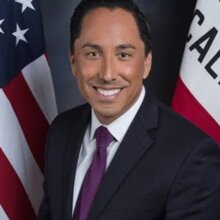
As the United States commemorates its 250th anniversary, American cities are becoming increasingly important global centers for dynamic economic growth, successful civic innovation, strengthening community resilience, and engaging globally to attract talent and solutions. This bipartisan conversation with San Diego, California Mayor Todd Gloria and Columbia, South Carolina Mayor Daniel Rickenmann will examine how mayors are bringing together leaders from business, philanthropy, academia, and government to deliver results—from attracting foreign investment and expanding trade to revitalizing communities and advancing climate action. What can America’s cities teach us about the partnerships, leadership, and locally-driven solutions needed to strengthen the country’s global competitiveness and shape its role in the next century?
Ending tuberculosis (TB), the world deadliest infectious disease, will require more than better tests and medicines. It will require addressing the conditions that make people vulnerable to the disease in the first place. Malnutrition is both a driver and a consequence of TB, weakening immunity and increasing risks of TB infection, complicating recovery, and deepening the economic burden on affected families. This panel will explore why and how nutrition can be integrated into TB prevention, treatment, and social protection strategies, and how governments, communities, funders, and the private sector can work together to turn food and nutrition support into a powerful tool for ending TB. The Stop TB Partnership is a programming partner for the 2026 Annual Summit.
AI is no longer on the horizon for higher education. It is already here, and the decisions institutions make today will shape the future of teaching, learning, and opportunity for generations to come. Higher education has always been where the next generation of leaders, thinkers, and innovators are shaped, and AI is fundamentally changing what that responsibility looks like. In this session, industry and academia leaders explore what thoughtful AI adoption really looks like, the hard questions, the responsible choices, and what it means to prepare students not just for the workforce of today, but for a future that is still being written. What does it mean to educate the next generation when the tools, the rules, and the world itself are still being defined?
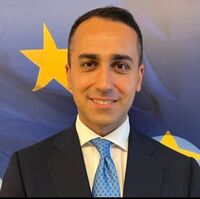
A conversation between EUSR for the Gulf Luigi Di Maio and Egyptian MP Sahar Albazar on democratic governance, technology, security, and political developments across the Middle East and North Africa (MENA) region. The discussion will examine evolving approaches to governance, political participation, institutional accountability, and democratic innovation, with particular attention to how digital transformation, artificial intelligence, and new forms of civic engagement are shaping public institutions and citizen participation.
This timely discussion will also address key security developments and their implications for regional stability, alongside the role of diplomacy and dialogue in managing tensions, building confidence, and advancing cooperation. It will consider how the Gulf and wider MENA region are navigating an increasingly complex geopolitical environment, and the opportunities for strengthening inclusive, transparent, and responsive governance while supporting regional security and diplomatic engagement.
AI is restructuring labor markets, remote infrastructure is untethering talent from geography, and entrepreneurship is emerging as the dominant path to economic mobility across sectors and generations. Yet access to capital, networks, and institutional support remains deeply uneven. This session brings together leaders across business, policy, and education to examine how the architecture of work is being rebuilt, what conditions are producing the next generation of founders and career innovators, who has access to the tools and capital needed to succeed, and what governments and institutions must do to ensure the transition benefits more than the few already positioned to lead it.
Nominated by Concordia’s Board of Directors, Leadership Council, Senior Advisors, and Advisors, three Leadership Award recipients are selected from the private sector, public sector, and civil society each year by the Leadership Award Committee. Chaired and led by Anita McBride, Concordia Leadership Council Member and Former Assistant to President George W. Bush & Chief of Staff to First Lady Laura Bush, will provide insight on this year’s three recipients, the history of the Leadership Award, and the Leadership Award Committee process.
The Concordia Leadership Award recognizes global leaders within the public, private, and nonprofit sectors who inspire others through their ability to turn vision into impact. In this session, the Concordia private-sector Awardee, Ryan Gellert, will receive his award.
One year after examining American views of the United Nations, Gallup returns with new insights into the broader state of public trust. This conversation will explore how confidence in global leadership has evolved, the implications for international cooperation, and what leaders across sectors must do to strengthen public legitimacy in an increasingly fragmented world.
Gallup is a programming partner for the 2026 Annual Summit.
From his work with the Fugees to his evolution as an artist, producer, and entrepreneur, Wyclef Jean has built a career on the power of human creativity. In conversation with President Iván Duque, the two will explore why imagination, originality, and human expression remain essential as artificial intelligence transforms how we create. The conversation will consider what makes creativity uniquely human, how technology can amplify rather than replace it, and why nurturing human creativity will be critical to innovation, culture, and the next generation of leaders.