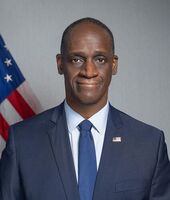
“It’s not right or left. It’s forward. It’s things that lift everyone up and leave no one out.”
The Hon. Andy Beshear
“Implementation will eat strategy any day. It’s about the implementation.”
Alejandra Castillo
Key Takeaways
Beshear cited Kentucky’s record job creation, doubled private investment, record exports and tourism, and four straight years of falling overdose deaths. He said businesses need three things: speed to market through ready-to-build sites, workforce pipelines (including $300 million in high school career and technical education and community college programs built around employers’ needs), and a personal relationship with the governor. The moment that matters most, he said, is the ribbon-cutting, when the jobs become real.
He described himself as a Democrat elected three times in a state President Trump won by 30 points, now with about a 65% approval rating. He keeps ego out of governing, stands by his convictions through vetoes regardless of polling, and spends “80% of my time on things that matter to 100% of my people,” such as jobs, health care, roads, schools, and safety.
Beshear said farmers are struggling more than ever. In his account, soybean and corn farmers lost markets through USAID cuts, the end of the farm-to-cafeteria program, and China shifting to Brazil and Argentina after U.S. tariffs, while facing record diesel prices and fertilizer supply risks through the Strait of Hormuz. He sees Americans losing faith that hard work leads to getting ahead.
He has managed 17 federally declared weather disasters in six and a half years, plus a UPS plane crash, a mass shooting, helicopter crashes, and a pandemic. He said disasters show the best of people, and a leader’s job is to be present, organize that generosity, and learn from criticism. After the 2022 floods that killed 45 people, Kentucky added rescue helicopters, swift-water boat teams, search-and-rescue teams, and temporary housing using travel trailers.
To restore the American dream, he called for ambitious investment in housing, noting the average first-time homebuyer is now 40, with funding tied to how fast construction starts. He also proposed tariff rollbacks tied to commitments to lower grocery prices, letting Medicare and Medicaid negotiate drug prices for everyone, and a “fix-the-darn-government” constitutional amendment. That amendment would ban partisan gerrymandering, enshrine parts of the Voting Rights Act, set term limits for Congress and the Supreme Court, overturn Citizens United, ban stock trading by officials, and elect the president by direct popular vote.
He said government’s main job for business is creating stable, predictable rules, criticizing tariff policy that can change “by the minute.” He argued his party should be pro-business as well as pro-worker, because company profits and good wages go together, and that “jobs are never about politics.”
His new book, Go and Do Likewise, takes its title from the parable of the Good Samaritan and reflects his view that true faith lifts people up rather than dividing them. On the world stage, he highlighted foreign investment in Kentucky, noting the world’s largest Toyota plant is in Georgetown, Kentucky, and called for repairing relationships with allies, especially Canada, that he said the current administration has damaged.
Action Items
States should invest in ready-to-build sites, infrastructure, and faster permitting so new investments can start operating sooner.
Build workforce pipelines with employers at every level, from high school career and technical education to community colleges and engineering programs.
Elected leaders should focus most of their time on shared priorities and work across party lines, keeping ego and personal grievances out of governing.
Strengthen disaster preparedness with honest reviews after each crisis, including rescue capacity, pre-positioned response teams, and temporary housing plans.
Increase housing supply by tying funding to how quickly construction starts and by reducing regulatory and local barriers.
Give businesses stable, predictable trade and regulatory policy, and rebuild relationships with allies such as Canada to reopen export markets for farmers and other producers.