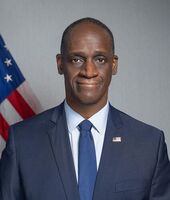
“It’s no different than any other literacy that I think we’ve taken on over the years. It’s just now here’s a new one for us to get young people ready for.”
Bill Shaw
“Universities sometimes function as knowledge factories, but we have to go beyond that to actually getting to judgment.”
Kavita Bala
“The guardrails really should not be around not using AI. I think that ship has sailed. But the guardrails should be around how to use it in the most responsible way.”
Justina Nixon-Saintil
Key Takeaways
AI adoption in schools is outpacing readiness, with an IBM and Morning Consult study finding only about 20% of educators have received extensive AI training while 60–70% already use it, and Nixon-Saintil argued that guardrails should focus on responsible use rather than avoiding AI altogether.
Britebound’s survey of over 3,000 young people found that 83% use AI every day, but only 36% think their teachers help them with it and only 42% feel ready for the future, with a sharp gap between private and public school students that means colleges will receive a very uneven incoming class.
Shaw said the real problem is unguided AI use, and that guided exploration starting in middle school, followed by experiential and work-based learning in high school, can prepare students to treat AI as a tool rather than a shortcut, much like any other new literacy.
Cornell is pursuing human-centered, ethical, and responsible AI by bringing research, teaching, public engagement, and operations under a vice provost for AI strategy, requiring an AI critical literacy program for all freshmen, and studying AI’s environmental impact across its full life cycle.
Mindset, including curiosity, resilience, and lifelong learning, is becoming as important as skill set, and is best built through applied learning and assessments that require students to explain where their own judgment came in, as in IBM’s AI Builders Challenge.
Bala identified three disruptors facing higher education, namely technology and AI, a changed relationship with the federal government, and declining public trust, and said universities must move beyond being “knowledge factories” toward developing judgment by drawing on all their disciplines.
Looking five to 10 years ahead, the panelists expected a resurgence of the humanities and liberal arts, closer partnerships between industry and academia, and a greater emphasis on lifelong learning.
Action Items
Schools and universities should invest in AI training for educators so they can use it responsibly and free up more time for students.
Educators should redesign assessments so students must explain how they used AI and where their own judgment shaped the result.
K-12 systems should introduce guided AI literacy starting in middle school, paired with experiential and work-based learning, with particular attention to closing the gap between public and private schools.
Universities should require AI critical literacy for incoming students and coordinate their AI strategy across research, teaching, and operations.
Institutions should assess the environmental impact of AI across its full life cycle, from sourcing to energy, water, and waste.
Universities should strengthen partnerships with industry, nonprofits, other universities, and local communities, and reinvest in the humanities, to prepare students for a changing workforce and rebuild public trust.