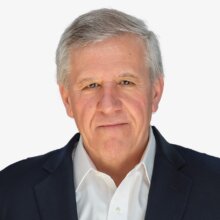
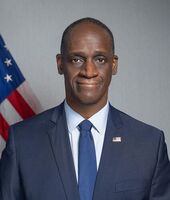
“We see some political will in Brussels… So, I’m optimistic that perhaps we’re going to have some positive developments in the years to come.”
Symeon G. Tsomokos
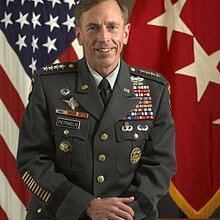
“If we share this intention to live together in one family, of course, we need to work for that. And we are not waiting neither.”
H.E. Maka Botchorishvili
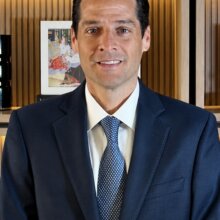
“I’m pretty much convinced that today my country is a better place for living compared with three years ago. And I’m sure that two years from now, my country will be a much better place for living than today.”
H.E. Hristijan Mickoski
Key Takeaways
Both countries presented themselves as reliable U.S. partners, with North Macedonia citing new agreements on defense, energy, and mining (including DFC involvement in antimony) and Georgia pointing to decades of contributions to U.S. and NATO missions and the U.S.-brokered Azerbaijan–Armenia peace deal.
North Macedonia has pursued EU membership for about 25 years, changing its flag, constitution, and name, yet remains blocked while Croatia, which started alongside it, joined over a decade ago; Mickoski said some member states use bilateral disputes to demand changes to identity rather than institutions.
Georgia sees EU membership as an emotional, historic aspiration, but argues enlargement must first prove it works in the Western Balkans and that Georgia and the EU need to learn how to coexist, while Georgia’s 16 free trade agreements complement rather than replace its European path.
Both economies are performing strongly despite regional wars, with North Macedonia reporting 4.3% real growth in Q2 2026 and inflation below the EU average, and Georgia reporting roughly 8–9% annual growth over six years along with low corruption.
North Macedonia is becoming an energy hub through a new oil pipeline from Thessaloniki that lets it sell fuel about 50 euro cents per liter cheaper than its neighbors, plus gas interconnectors with Greece and Serbia that will link the Alexandroupoli LNG terminal to Central Europe by 2028.
Georgia connects eight landlocked countries to the sea and to Western markets through its seaports, the Baku–Tbilisi–Kars railway, energy links through Azerbaijan and Turkey, and a planned electricity cable that is an EU priority project.
Both leaders described security and stability as the foundation for growth at a time when Europe faces political uncertainty and what Mickoski called the biggest energy crisis in memory, driven by the wars in Iran and Ukraine.
Action Items
The EU should turn positive rhetoric on enlargement into tangible steps, such as formalizing the Franco-German proposal in upcoming Council conclusions, and prevent bilateral disputes from blocking candidate countries.
The U.S. and the DFC should expand investment in the region’s critical minerals, energy, and defense sectors, building on recent strategic dialogues with both countries.
Regional governments and partners should keep the Greece–North Macedonia and North Macedonia–Serbia gas interconnectors on schedule to diversify Europe’s energy supply.
European and international partners should prioritize the electricity cable and deep-sea port projects in Georgia to strengthen the Europe–Central Asia trade corridor.
Investors should look at both countries’ strong growth, low inflation, and trade agreements as openings for investment in infrastructure, energy, and technology.
North Macedonia should pursue its goal of becoming a regional hub for AI and high-tech industry alongside investment in transmission lines and transport infrastructure.