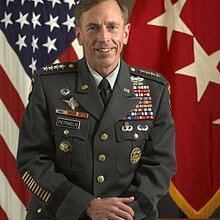
“Your gain is my gain and vice versa. It should not be zero-sum... This is not just a slogan or a distant dream. It existed before. It can be ten times better in the future.”
Prince Reza Pahlavi
“If he was 25 years old living in Iran today, what would he be thinking?”
Matthew Swift
Key Takeaways
Prince Pahlavi said that before the 1979 revolution, Iran was at peace with its neighbors, with daily El Al flights between Tel Aviv and Tehran and close ties to Arab leaders. In his account, the revolution brought an era of extremism, proxy forces such as Hezbollah, Hamas, and the Houthis, nuclear threats, and terrorism that has spread far beyond the region.
His central message was that the Iranian people, not the regime, should be the focus of policy. He argued the regime will never change its behavior and uses negotiations to buy time, and said 40,000 people were killed in one night demanding freedom. In his words, they died for liberty, “not for a nuclear deal or for the Strait of Hormuz.”
He described young Iranians as willing to fight “to the death if necessary” for freedom, citing a 27-year-old who lost an eye during the Women, Life, Freedom protests, returned to Iran, and now faces possible execution. He called standing with them a moral obligation for Western democracies.
He made an economic case for change. Iran’s GDP was twice South Korea’s in 1978, while South Korea’s is now five times Iran’s. With 93 million educated people and vast resources, he said a free Iran could be “the South Korea of the Middle East” instead of its “North Korea,” open an untapped market, and help Europe reduce its energy dependence on Russia.
He argued that change would not require foreign troops or U.S. taxpayer money, since “the boots on the ground in Iran are the people of Iran themselves.” He suggested repurposing more than $100 billion in frozen Iranian assets to support them.
He described his life since his father’s death in 1980 as entirely devoted to Iran, including volunteering to fly for Iran’s air force against Iraq’s invasion despite the revolutionary regime. He said his family’s life remains “in a holding pattern” until Iran is free.
He pointed to South Africa after apartheid and Poland after communism as proof that countries can transform after authoritarian rule. He envisioned a region that spends on hospitals and the environment instead of missiles, named water scarcity as his biggest concern, and called for cooperation that isn’t zero-sum.
Action Items
Western governments should put the Iranian people, rather than negotiations with the regime, at the center of their Iran policy.
Provide direct support to Iranian civil society and protest movements, and speak up publicly for detained activists facing execution.
Explore ways to use frozen Iranian assets for the benefit of the Iranian people.
Begin planning for economic re-engagement with a future Iran, including investment and energy partnerships with Europe.
Develop regional cooperation frameworks focused on shared challenges such as water scarcity, health, and the environment.