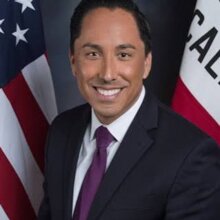
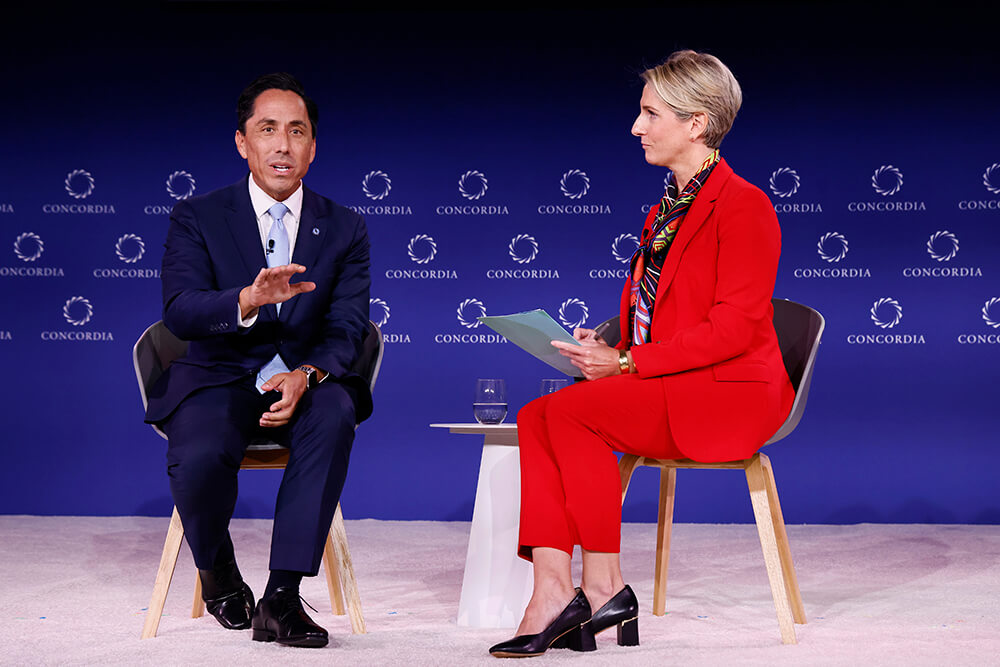
NEW YORK, NEW YORK – SEPTEMBER 21: (L-R) Todd Gloria, Mayor of the City of San Diego, CA and Leigh O’Neill, Senior Advisor for the Institute for Global Affairs at Eurasia Group, speak during the 2026 Concordia Annual Summit at Sheraton New York Times Square on September 21, 2026 in New York City. (Photo by Paul Morigi/Getty Images for Concordia Summit)
Important Quotations
“Mayors get stuff done. Mayors deliver. In the most polarizing of political environments, we got a major comprehensive housing bill done.”
The Hon. Todd Gloria
“Mayors are truly emerging as the CEOs of these major global power centers.”
Leigh O’Neill
Key Takeaways
Since 2007, more than half the world’s people have lived in cities, and by 2050 two-thirds of global population growth is expected to happen in cities. As a result, mayors are becoming the “CEOs” of global power centers, competing for investment, jobs, and talent as well as delivering city services.
Partnerships with philanthropy can multiply what a city can do. San Diego and the Wounded Warrior Project split the cost of a veteran service officer who recruits veterans into city jobs, which has sharply increased the number of veterans the city employs.
Mayors have real tools on housing. San Diego updates its land development code every year and requires reviews of fully affordable and transit-oriented housing projects within 30 days; reviews now average nine days. Annual permits have risen from fewer than 4,000 homes to nearly 10,000. Mayors cannot, however, force property owners to build, cover financing gaps, or make other cities follow suit.
San Diego’s population has doubled since 1978, from 750,000 to 1.4 million, while yearly home construction fell from 15,000 to under 4,000. Gloria called this “a perfect recipe” for an affordability and homelessness crisis, and stressed that it is a policy failure, not the fault of young people struggling to get ahead.
Cities compete with the whole world, not just their neighbors, so global engagement brings results home. Gloria cited new direct flights and his meetings with chipmaker ASML in the Netherlands, which he said led to an expansion bringing thousands of jobs to San Diego. He said that being transparent and reporting back to residents is key to keeping public support for the travel.
San Diego and Tijuana see themselves as one binational region with the busiest land border crossing in the Western Hemisphere. They are building a third port of entry together as a public-private partnership, reflecting Gloria’s view that “the border is not a liability. It’s an asset.”
The U.S. Conference of Mayors brings together about 1,300 cities across party lines. Gloria said its members are united on openness to investment and trade and on the need for comprehensive immigration reform, and he cited the passage of a major federal housing reform bill as proof that mayors deliver even in a polarized climate.
Action Items
Cities should update zoning and building codes more often and set fast-track review deadlines for affordable and transit-oriented housing, with enough staff to meet them.
Partner with philanthropies and nonprofits on shared-cost positions and programs that build local talent, such as recruiting veterans into public service.
Encourage more cities to commit to housing production, and use coalitions like the U.S. Conference of Mayors to secure federal resources and spread proven reforms.
Fund and staff city-led trade missions that include local business leaders, set clear goals before departure, and report results to residents afterward.
Treat cross-border regions as shared economies and invest jointly in infrastructure, such as border crossings, through public-private partnerships.
Use mayors’ ability to work across party lines to advance national priorities like housing and immigration reform when Washington is gridlocked.