“Think what remains when your investment ends... with a lot of American money, there were sandcastles constructed, and when, you know, water comes, there is nothing left.”
Dr. Lucica Ditiu
“AI is going to complement the workforce, particularly improve the access for the subset of population that may not have access directly to physicians or clinics or any sort of treatment.”
Alex Jacobs-Hajian
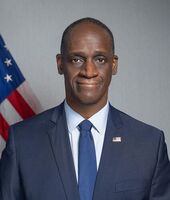
“The goal of current bilateral health agreements is national self-reliance. Partner governments steadily increasing their own investment and ultimately running their own programs.”
Dr. Nicole F. Roberts
Key Takeaways
There is a large gap between talk about country ownership and what happens in practice. Donors want to keep control of how their money is used, and governments often overpromise on how quickly they can run their own health systems.
AI is being adopted in countries much faster than it is being governed. Ditiu described it as the “Wild Wild West,” with few rules and little thought about who owns the data and the systems.
Real ownership depends on capability, not just funding. Who runs the system, who fixes it if it breaks, who trains the local workforce, and who is accountable all matter as much as who pays.
Data ownership means control, not just access, because access through an API or license can be revoked. Control means holding the encryption keys, deciding where data is hosted, keeping access logged and auditable, setting rules on external model training, and having a clear exit path.
Systems pushed by different donors often can’t talk to each other. Separate platforms for labs, treatment, and pharmacy can make a country look technologically advanced while being fragmented underneath.
Securing domestic financing is the hardest part for ministries. Health and finance ministries often don’t coordinate, frequent government turnover resets relationships, and populations left out of budget requests stay underserved.
Countries are at very different stages, but strong frontrunners exist, including Nigeria, South Africa, Ethiopia, India, Indonesia, the Philippines, and Bangladesh. Both speakers agreed that health is a core government responsibility.
Action Items
Create national AI governance frameworks at the same time as deploying tools, not after, and define who owns the data and the systems.
Design technology on infrastructure the ministry already owns, using local data. Deployment should fit the setting, whether cloud or offline laptops, and should keep working if the vendor disappears.
Require countries to hold their own encryption keys and keep auditable access logs, and put the real cost of this ownership in the ministry’s budget.
Require open standards such as FHIR so lab, treatment, and pharmacy systems can work together, and stop funding separate donor-specific platforms.
Write vendor contracts with capped or fixed pricing, clear data rights, limits on training models with country data, and a defined exit path if the service ends.
Invest in local workforce training, and build closer ties between health and finance ministries so budgets cover everyone who needs care and continuity survives changes in government.
Use a shared scorecard to measure progress. It should track health outcomes, technology performance, declining reliance on vendors, cost per patient, the share of costs funded domestically, and what capacity remains after donor investment ends.