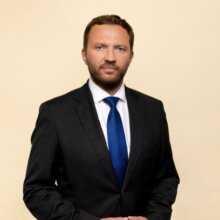
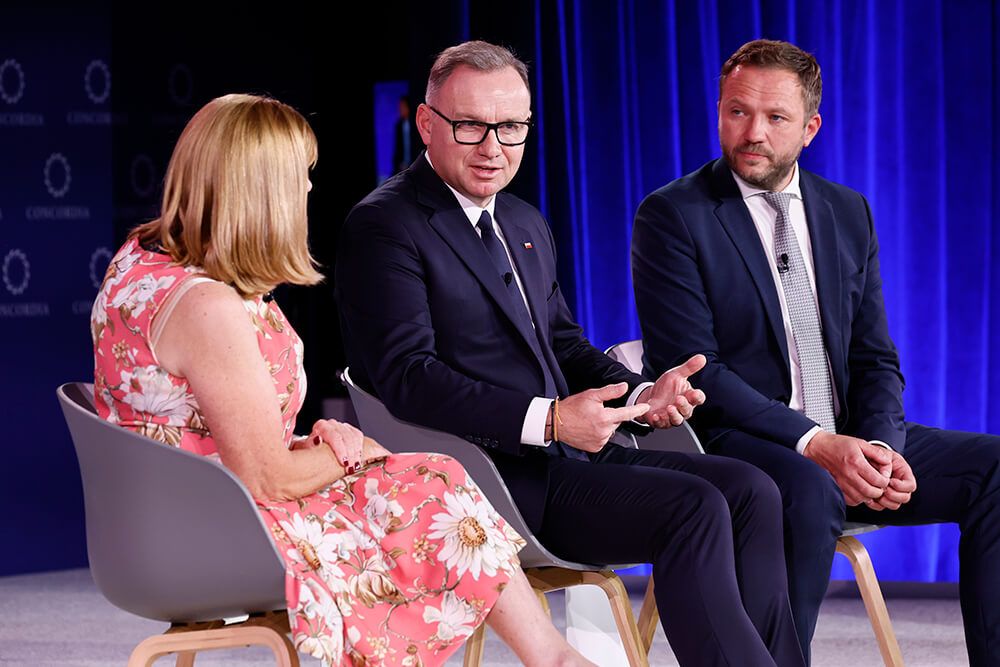
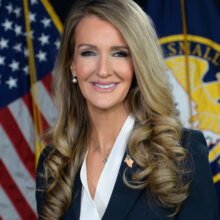
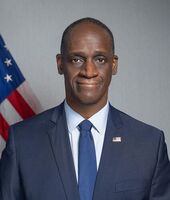
NEW YORK, NEW YORK – SEPTEMBER 21: (L-R) Paula Dobriansky, Vice Chair of the Atlantic Council Scowcroft Center for Strategy & Security, Andrzej Duda, Former President of the Republic of Poland, and Margus Tsahkna, Minister of Foreign Affairs, Republic of Estonia, speak during the 2026 Concordia Annual Summit at Sheraton New York Times Square on September 21, 2026 in New York City. (Photo by Paul Morigi/Getty Images for Concordia Summit)
Important Quotations
“Both of you lived under communism, and both of you know what it means to be free, and you are protecting that.”
Amb. Paula Dobriansky
“Forget about the Russian sphere of influences. Because in Russian sphere of influences, there are free and very old nations with their own culture.”
H.E. Andrzej Duda
“We are not acting because of fear. It’s a big, big difference if you act because of fear, or because you know what to do... Please trust us this time. We know what to do.”
H.E. Margus Tsahkna
Key Takeaways
Both leaders said the eastern flank warned about Russian imperialism for about 20 years and was dismissed as “Russophobic.” Duda traced a clear path from Georgia in 2008 to Crimea in 2014 to the full-scale invasion of Ukraine in 2022, recalling President Lech Kaczyński’s warning in Tbilisi that the Baltic states and Poland could be next.
Poland and Estonia are spending around 5% of GDP on defense. Since 2015, Poland has been replacing Soviet-era equipment with U.S. systems such as Abrams tanks, and current talks with Washington focus on a permanent U.S. base and joint defense production.
Tsahkna said NATO is militarily stronger than before. Finland and Sweden’s membership has made the Baltic Sea a NATO “internal lake,” NATO plans since the Vilnius summit envision taking any war to Russia itself, and he welcomed what he called President Trump’s “brutal pressure” on Europe to spend more on defense.
Unity and clear red lines work. After Russian jets violated Estonian airspace for 12 minutes and Estonia invoked NATO’s Article 4, President Trump said future intruders should be shot down, and Tsahkna said there have been no serious violations since.
Tsahkna said the main threat today is not a ground invasion. The Russian side of Estonia’s border, which held 120,000 troops in 2016 and 2017, is now empty. Instead, Russia is using provocations, hybrid attacks, and sabotage across Europe to exploit fear of escalation and divide allies.
Poland has hosted millions of Ukrainians, whom Poles call “guests,” runs the Rzeszów-Jasionka hub for aid to Ukraine, and has sent more than 360 tanks. Estonia will co-host the Ukraine Recovery Conference in Tallinn in late January, aiming for practical results on investment, investor insurance, and accountability during what Tsahkna expects to be Ukraine’s hardest winter.
Both described the U.S. as their most important ally. Duda stressed continuity across administrations: the first agreement for U.S. troops in Poland was signed under President Obama and continued under Presidents Trump, Biden, and Trump again. Tsahkna said the central question is not only what peace looks like in Ukraine, but what kind of Europe and what security guarantees emerge from it.
Action Items
European NATO members beyond the eastern flank should match the spending and capability investments of Poland and the Baltic states.
Advance a permanent U.S. military presence in Poland and expand joint defense production between the U.S. and eastern flank allies.
Keep allied red lines unified and clearly communicated, with firm, predictable responses to airspace violations and other provocations.
Strengthen Europe’s defenses against hybrid threats, including sabotage, cyberattacks, drones, and attacks on critical infrastructure.
Make the Tallinn Ukraine Recovery Conference deliver concrete results, such as investment commitments, insurance for investors, and accountability, to help Ukraine through the winter.
Ensure any peace settlement in Ukraine includes credible security guarantees and rejects the idea of a Russian sphere of influence.