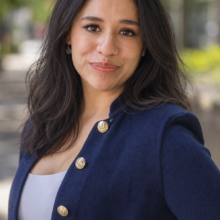
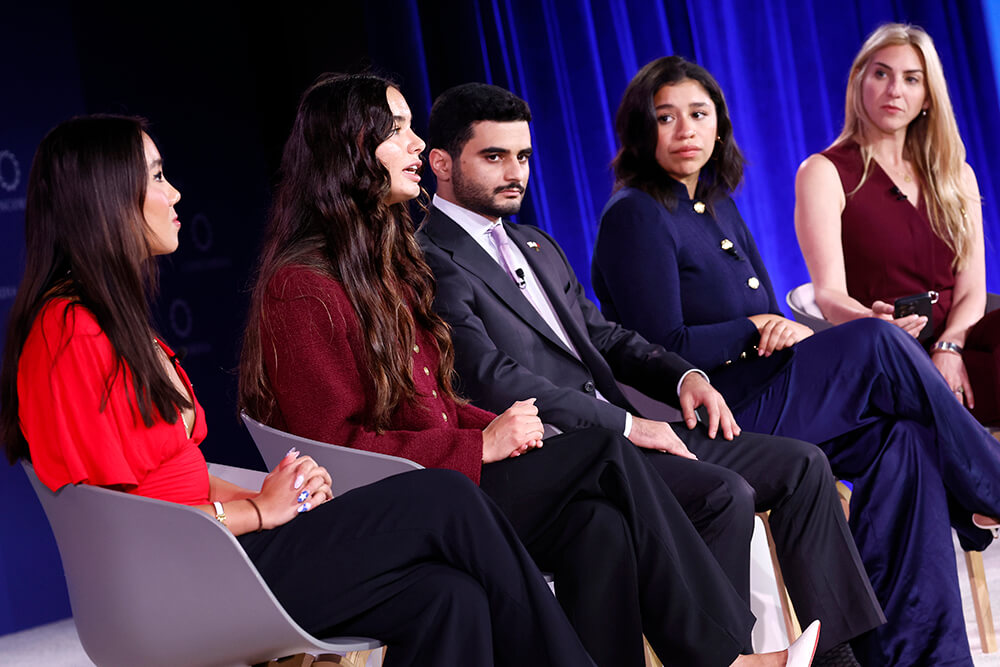
NEW YORK, NEW YORK – SEPTEMBER 21: (L-R) Olivia Zhang, CEO And Founder of Cancer Kids First, Maya Hammoud, CEO of the Perception Foundation, Ali Al-Mawlawi, Youth Envoy from Qatar Debate, Sophia Alicea, UNA-USA Youth Observer to the United Nations and Amy Braun, President and CEO of HealthCorps, speak during the 2026 Concordia Annual Summit at Sheraton New York Times Square on September 21, 2026 in New York City. (Photo by Paul Morigi/Getty Images for Concordia Summit)
Important Quotations
“You should never have to change who you are or alter it to gain the attention, but rather you’ll gain it for who you are.”
Maya Hammoud
“When you trust and give young people the chance to take on projects, they can learn and grow, and then you are therefore creating a ripple effect because you’re helping build the next wave of young people who are eventually going to lead and guide our country and the world.”
Olivia Zhang
“Don’t ask young people to imagine the future for you. Ask young people, how can I help make the future happen for you?”
Sophia Alicea
“An impassioned teenager is a force to be reckoned with.”
Amy Braun
“We can’t keep young talent on the bench and then complain that they don’t have enough experience. At some point, we’ve just got to put them in the game.”
Ali Al-mawlawi
Key Takeaways
Al-Mawlawi said young people’s real impact often comes from what echoes outside the room, as Qatar Debate’s workshop in New York last year led to real funding and more opportunities, growing from one envoy at Concordia last year to three this year.
Young people earn attention by being authentic rather than pretending to be adults, as Hammoud and her twin sister did by wearing their signature hot pink blazers, and as Zhang learned after more than 60 rejections, when she began sharing her personal story, highlighting youth networks, and emphasizing digital fluency.
Zhang grew Cancer Kids First from a small high school club into the world’s largest youth-led cancer organization, with 43,000 volunteers in 80 countries, after its first social media videos reached over 4 million views in a week and grew its volunteers from about 100 to 4,000 by making it easy to get involved and appealing to what motivates young people.
Hammoud’s Perception Foundation reaches 700,000 people in 71 countries, and its eight peer-reviewed scientific publications both improved its sensory room designs and gave it credibility, while sensory rooms placed in public spaces spark conversations that reduce stigma around neurodevelopmental disorders.
Alicea stressed that her seat at the UN represents all American youth, not just herself, that hope is the most powerful tool in advocacy, and that local community work is international affairs, adding that institutions have a responsibility to communicate with communities rather than expecting young people to decode 300-page documents full of acronyms.
Al-Mawlawi said the Middle East doesn’t get enough credit for its openness, since young people there are willing to discuss sensitive topics when given the right setting and framing, and debate is helping prepare many of them for university and international affairs.
The panel acknowledged that technology brings risks like misinformation and excessive screen time, but argued it can be used for good through authentic, behind-the-scenes content that shows young people what is possible, combined with teaching them to question and evaluate their sources.
Action Items
Institutions should give young people real decision-making power, including voting and stakeholder roles, rather than only representation or a chance to voice opinions.
Organizations should create internships and leadership roles that give young people meaningful projects and responsibility.
Governments and international institutions should make their information accessible through plain language and formats that young people actually use.
Youth-focused organizations should create low-barrier ways to get involved that connect to young people’s motivations, such as leadership experience, career exposure, and service hours.
Schools and institutions should teach media literacy and source evaluation, while institutions take responsibility for sharing accurate, credible information online.
Funders should invest in youth-led initiatives and help scale programs like debate training and public sensory rooms that benefit whole communities.