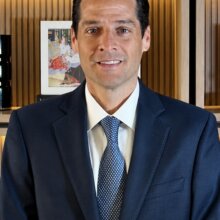
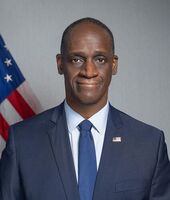
“Anybody who wants to think about the future of their children, the first thing they need to think about is the future of the other party’s children.”
Dr. Majed Al-Ansari
“How we can build an infrastructure to deal with conflicts as they come up so we’re not starting from scratch every single time.”
Josh Rogin
Key Takeaways
Al-Ansari explained the Prime Minister’s new “Supply Chain for Peace” initiative. After World War II, economies became deeply interdependent, but peacemaking stayed in the hands of a few great powers. The initiative would combine many countries’ strengths in mediation, humanitarian aid, security, peacekeeping, and multilateral diplomacy, with a hub where these come together. It builds on Qatar’s mediation record in the DRC and Rwanda, Afghanistan, Latin America, Israel and Palestine, and Iran.
He called the UN essential but limited, because it needs agreement among 193 members. Qatar, a major donor to UN agencies, also works in smaller groups organized by region or capability, such as with Norway, Switzerland, and its GCC partners.
He described the outbreak of the Iran war on February 28 as an “earthquake” with global effects, and spoke of his daughters learning to shelter from missile alerts in a region once seen as an oasis of stability. Qatar has been mediating with Pakistan and Oman, but he said the MOU signed in Lausanne didn’t hold. The goal now is a short-term deal, with a sustainable ceasefire and a reopened Strait of Hormuz, to open the door to fuller negotiations.
He said a deep lack of trust, with each side expecting the other to “blink first,” is the main obstacle. In his view, the war will end at the negotiating table either way: “Either we sign a deal now, or we sign a deal 10 months away. The only difference is the level of death and destruction.”
Every delay brings new complications, such as the strike on Saudi Arabia’s east-west pipeline on the eve of the planned Salalah meeting and Houthi attacks on Saudi Arabia. Gulf states are trying to keep the Houthi conflict separate from the Iran war. He also highlighted growing regional coordination and independence of action: Oman mediating with the Houthis, Qatar with Iran, and GCC states working together on defense alongside the United States.
Al-Ansari said the Strait of Hormuz must return to a status quo that respects international law. Otherwise, it sets a precedent for other key waterways such as the Danish straits and the Strait of Malacca. He called the U.S. presence, including at Al Udeid Air Base, a lasting safeguard, and summed up Qatar’s approach as “partnership without agency is dependence. Partnership with agency is resilience.” He said Gulf air defenses intercepted more than 95% of incoming projectiles.
On Gaza, he described several negotiating tracks running at once. He said the Palestinian factions had agreed to give up weapons and enter a political process, but that Israel has not fulfilled its commitments, citing Israel’s election campaign and developments in the West Bank. He called for a generation of politicians focused on lasting peace rather than short-term political interests.
Action Items
Develop the Supply Chain for Peace into a working framework with clear roles and standing coordination among mediators, donors, security providers, and multilateral bodies, so peacemaking doesn’t start from scratch with each new conflict.
Prioritize a short-term confidence-building agreement with Iran, centered on a ceasefire and a reopened Strait of Hormuz, as the first step toward broader negotiations, and build from smaller wins toward a larger settlement.
Uphold international maritime law and freedom of navigation in the Strait of Hormuz and Bab el-Mandeb to prevent a damaging precedent for other strategic waterways.
Strengthen regional defense coordination against missiles, drones, and hybrid threats, alongside continued partnership with the U.S. and NATO.
Begin laying the groundwork for regional security dialogue and economic interdependence between the Gulf states and Iran, so that future conflict costs every side.
Press all parties to implement their commitments under the Gaza peace plan, and support Palestinian unity talks and the Palestinian Authority.