Capital Allies: Reshaping America’s Industrial Future

Session
Partners

Session Summary

Important
Quotations

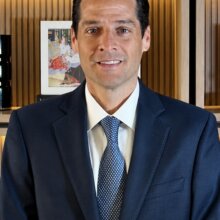
“That 12-billion-dollar investment that has ballooned to 265 didn’t happen without extraordinary cooperation between the local, public, and private sectors.”
Matthew Wells
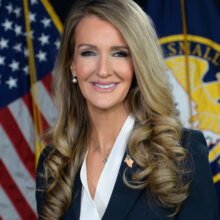
“When I met with TSMC two years ago, their workforce was 50% Taiwanese, 50% American. In the time since, they have shifted to 75% American workers.”
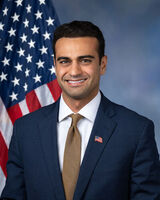
The Hon. Abe Hamadeh
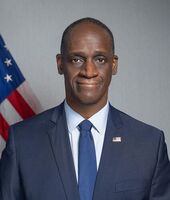
“Invention is not missing. The U.S. is the best at innovation. What’s missing is that middle of getting that capital deployed.”
Dr. Laureen Meroueh
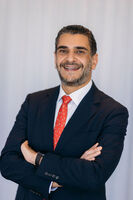
“Capital certainly does not follow tariffs. It follows returns.”
Hooman Shahidi

Key
Takeaways

  • Capital isn’t the constraint; execution is. Panelists agreed there’s more foreign and institutional capital available than ever. The bottleneck is turning announcements into built, operating projects quickly.
  • Capital follows returns, not policy signals. For durable investment, Shahidi said projects need contracted revenue, offtake/PPA structures, and a credible exit. Tariffs alone don’t move capital.
  • Supply chain lead times are a real barrier. Transformer lead times of 160+ weeks were cited as a concrete example. Long-lead equipment can stall plants even when financing is in place.
  • Arizona shows the model at scale. TSMC’s investment grew from $12B to $265B in about five years. Hamadeh credited a full ecosystem (packaging, workforce training, universities) and coordination across local, state, and federal levels.
  • Reshoring is about capability, not just plants. Meroueh argued the U.S. must rebuild whole industrial supply chains. Examples: no new furnace to make steel from iron ore since 1979, and roughly 94% of the high-purity iron in rare earth magnets coming from China.
  • The gap is “business innovation,” not product innovation. The U.S. leads on invention. What’s missing is the middle stage: deploying capital so innovators can reach production scale.
  • Values-based underwriting matters. Shahidi raised concern about adversary investment in U.S. infrastructure, arguing capital decisions should reflect long-term national security and a 50–100-year horizon.
  • Workforce needs both degrees and trades. Panelists described a shift away from four-year-only pathways. Universities are partnering with high schools, and Hertha recruits from oil and gas and does outreach down to middle school.
  • Talent cost and quality are pressure points. Shahidi pointed to the high cost of hiring in some markets. Meroueh pointed to the time it takes to find candidates who meet a high technical bar.
  • Geopolitical stability underpins investment. Hamadeh argued resolving overseas conflicts is necessary to keep capital flowing into the U.S.

Action
Items

The panel didn’t make formal commitments, so these are the actions panelists called for: 
  • Shorten lead times for critical equipment (e.g., transformers) and remove supply chain barriers that slow plant buildouts. 
  • Move from announcing capital to deploying it into manufacturing infrastructure and scale-up of proven technologies. 
  • Structure projects for investability: contracted revenue, offtake agreements, and clear exit paths. 
  • Apply values-based and national-security screening to foreign investment in strategic infrastructure. 
  • Replicate the Arizona model: coordinated public-private-academic ecosystems built around anchor investments. 
  • Expand trades pathways and industry–education partnerships, starting as early as middle school. 
  • Recruit veterans into advanced manufacturing (Hamadeh’s Emerging Tech for Veterans Act). 
  • Reduce hiring costs and friction for employers in critical industries.