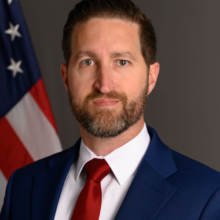
“Our shared objective should not be to eliminate plastics and the benefits they provide. It should be to keep plastics in the economy and out of the environment.”
Matthew Crocker
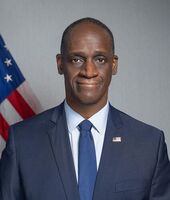
“There is no reason why we can’t protect the environment and grow the economy at the same time.”
The Hon. Wesley Brooks
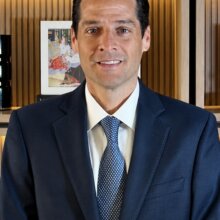
“We just support the overarching goals of the treaty to end plastic pollution. That is a real and necessary need.”
Julia Rege
“I will not measure the success of an agreement based on the number of restrictions it lists.”
Gulay Serhatkulu
Key Takeaways
Speakers broadly agreed that plastic waste in the environment is a solvable problem, and that the goal should be to keep plastics in the economy and out of the environment rather than eliminate products that preserve food, support health care, and make vehicles safer and lighter.
Industry is investing in solutions such as ExxonMobil’s advanced recycling operations in Baytown, Texas, which can process about 250 million pounds of plastic waste a year, but Crocker said scaling up also requires technology-neutral policies and long-term business certainty.
Brooks explained that the U.S. remains engaged in the plastics treaty, unlike the climate talks, and is guided by priorities of peace, prosperity, and the primacy of nation-states, meaning no one-size-fits-all rules, support for innovation, and an effective national security exemption.
The U.S. considers production caps a non-starter, and Serhatkulu argued caps would not keep plastic out of the environment, citing Oxford Economics research, while the moderator noted that some countries and environmental groups want a more ambitious starting point.
Toyota stressed that a treaty must distinguish between products, since vehicles contain over 400 pounds of plastic, an airbag uses the same polymer as a water bottle, and recycled materials must meet strict safety and durability standards before they can go back into cars.
Brooks said the most practical areas for agreement are reducing plastic leakage, improving product design, building waste management infrastructure in the countries that lack it, and developing markets for recycled materials, with the U.S. offering technical assistance and a financial mechanism.
Talks have collapsed twice, and the panelists hoped that the next round, INC 5.4, would favor pragmatic progress over what Serhatkulu called “racing for perfection.”
Action Items
Negotiators should focus the INC 5.4 agreement on areas of broad consensus, including reducing plastic leakage, waste management, product design, and recycling.
The treaty should allow countries to pursue their own national pathways toward the shared goal of ending plastic pollution.
Governments and partners should mobilize finance and technical assistance to build waste management infrastructure in the countries where most plastic leakage occurs.
Policymakers should adopt technology-neutral policies that support both mechanical and advanced recycling.
Industry and regulators should develop quality standards for recycled feedstock so it can be used safely in critical products like airbags and auto parts.
Companies should work with governments on design-for-recycling and on building stronger markets for recycled materials.