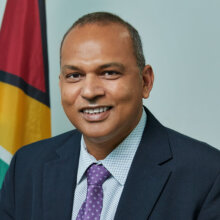
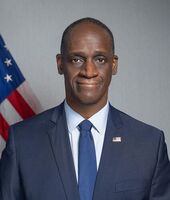
“How do we provide access to high-quality care, no matter how difficult the place may be to reach or no matter how far away or how close the population is.”
Dr. Rachel Vreeman
“There are positives and there are negatives, but it’s your approach that can change the outcome for your country.”
Dr. Frank Anthony
“In the challenge lies the opportunity. And so the opportunity now presents itself for you to fix the challenge so that it doesn’t repeat itself.”
The Hon. Kwabena Mintah Akandoh
Key Takeaways
The 2025 funding disruptions, including the end of USAID, exposed long-standing structural weaknesses in how global health is financed and prioritized. They have sped up efforts such as the Accra Reset to make health systems more sustainable.
Minister Anthony named three trends shaping health systems: shrinking external financing, migration of health workers that leaves training countries weaker, and fast-moving technology such as AI that can make systems more efficient.
When external funding contracted, Ghana’s president ordered the finance ministry to fill the gaps from domestic resources. Ghana increased funding to its National Health Insurance Fund, which meant setting priorities and making sacrifices elsewhere.
Both ministers agreed that predictable, reliable domestic financing is non-negotiable. Health programs should be grounded in domestic funding, with outside help treated as a supplement rather than the foundation.
Guyana’s partnership with Mount Sinai shows how a country can lead its own partnerships, drawing on a partner’s skills rather than handing over its system. The partnership has produced a health workforce strategy, standardized guidelines for chronic disease care, and school health screening that has reached about 100,000 of roughly 280,000 schoolchildren.
Partnerships work best when they build lasting capacity rather than running as time-limited projects that end when funding does. Upfront investment in technology can also create savings to put back into the health system.
Action Items
Ministries should set clear health priorities and work out their costs, then invite partners to fit into those priorities rather than follow outside agendas.
Build predictable domestic health financing, for example by expanding national health insurance, so essential services continue if external funding is withdrawn.
Design partnerships around capacity building and long-term sustainability, not short-term projects.
Develop national health workforce strategies to train and keep health workers and reduce the effects of migration.
Invest upfront in technology and AI to make health systems more efficient, and reinvest the savings in care.
Use national research institutions to ground health policy in local evidence.
Expand prevention-focused primary care, such as school health screening and standard guidelines for chronic disease.