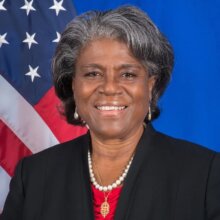
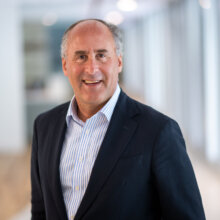
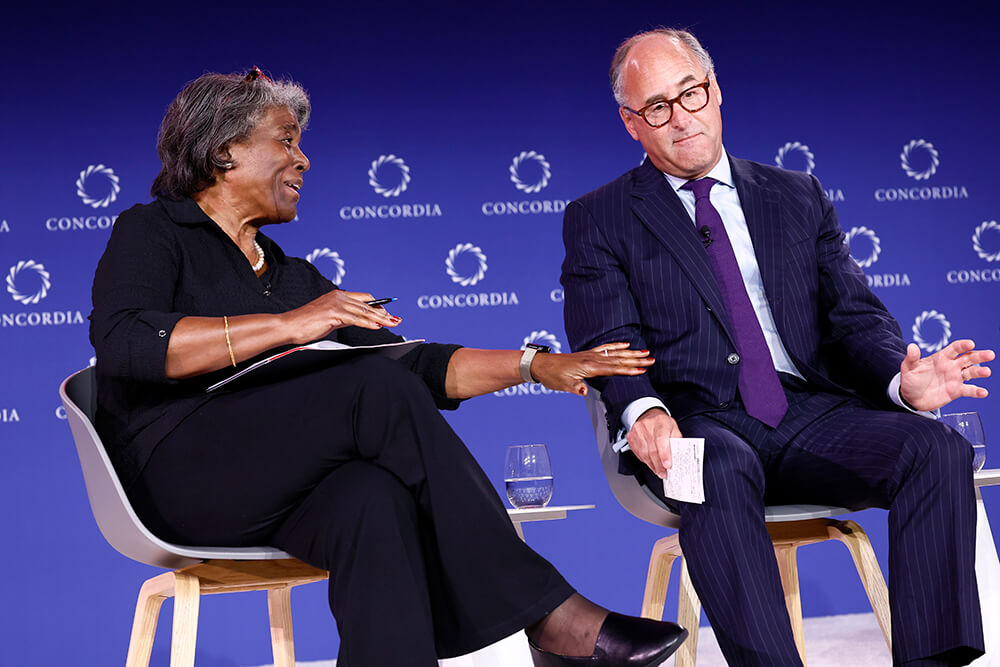
NEW YORK, NEW YORK – SEPTEMBER 22: (L-R) Linda Thomas-Greenfield, Senior Advisor at APCO and Former United States Ambassador To The United Nations, and Nick Snyder, Senior Fellow at the Hudson Institute, speak during the 2026 Concordia Annual Summit at Sheraton New York Times Square on September 22, 2026 in New York City. (Photo by Paul Morigi/Getty Images for Concordia Summit)
Important Quotations
“The dynamism in the region is really palpable, and particularly among young people, which is a resource that we sometimes ignore in this region.”
Amb. Linda Thomas-Greenfield
“If you’re an optimist, glass-half-full person, I think these are great days to be involved in the region.”
Nick Snyder
Key Takeaways
Snyder said Washington has been clear-eyed since President Trump’s first term that China aims to push the U.S. out of the Pacific. The region carries about two-thirds of global trade and faces flashpoints over Taiwan, North Korea, and the South China Sea. The U.S. now combines its five treaty alliances with more flexible regional groupings.
He called economic security the biggest change of the past five or six years. China is using supply chains as weapons, squeezing the U.S. and allies like Japan on critical minerals, pharmaceuticals, batteries, steel, and solar panels, and countries now recognize they must diversify.
Japan has become a much more forward-leaning military power since China fired missiles around Speaker Pelosi’s Taiwan visit and Russia invaded Ukraine. With about 50,000 U.S. troops and America’s only forward-deployed carrier group in Japan, AUKUS, the Quad, new three-way partnerships with Japan, Korea, and the Philippines, and joint exercises form what Snyder called a strong, interlocking regional defense network.
The speakers differed on reassurance. Thomas-Greenfield said allies are questioning whether the U.S. will be there for them, and that the President’s rhetoric “scares people,” even though she believes the U.S. would step up. Snyder said Asia has always been nervous about U.S. commitment, that much is being done quietly beyond the rhetoric, and that the main message to allies is to spend more on defense. He described Prime Minister Takaichi’s meeting with President Trump before the Trump–Xi summit as a carefully planned reassurance on Taiwan and the alliance.
Thomas-Greenfield said financing that supports countries’ own development priorities is one of America’s most important tools. Even tiny nations like the Cook Islands, with about 12,000 people, hold significant undersea resources and must be treated as real partners. Snyder added that private investment and trade matter more than aid, but U.S. companies struggle to compete with Chinese subsidies and “bags of cash.”
On UN reform, Thomas-Greenfield said today’s UN reflects the world of the 1940s. She led U.S. support for a rotating Security Council seat for small island states, two seats for African countries, and other additional seats while keeping veto power with the five permanent members, alongside broader efficiency reforms.
Both ended optimistic. Snyder pointed to supply chain diversification, stronger alliances that deter an invasion of Taiwan, and undersea internet cables and AI transforming smaller economies. Thomas-Greenfield highlighted the ambition of young people in the region, especially in the digital space.
Action Items
Work with allies to diversify supply chains for critical minerals, pharmaceuticals, batteries, and other strategic goods away from China.
Back U.S. security commitments with clear, consistent messaging so allies don’t have to doubt them.
Keep building interlocking alliances through AUKUS, the Quad, three-way partnerships, and joint exercises, with allies investing in real defense capabilities.
Expand private investment and development-focused financing in Pacific Island nations, treating them as true partners, and strengthen U.S. tools to compete with Chinese state subsidies.
Advance UN Security Council reform, including a rotating seat for small island states and permanent representation for African countries.
Invest in digital infrastructure such as undersea cables, and support young entrepreneurs and innovators across the region.