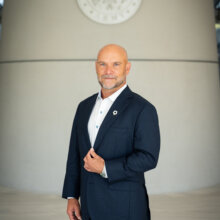
“There is no compression algorithm for experience.”
Troy Bertram
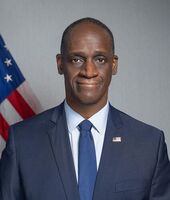
“The ability to be exceptional is within your hands... It’s a choice that you make on a daily basis.”
Will Swenson
“No matter what jobs AI takes away, we’ll still need leaders and we’ll still need leaders of character.”
Cory Crowley
“Whether you’re eight years old, you’re 18, or you’re 78, you can learn something through these stories... and you can translate that to your life.”
Alex Rhue
Key Takeaways
The panel’s central argument is that character-driven leadership is something AI will never replace. The hardest situations leaders face in combat, business, communities, and families require human judgment, emotion, and connection.
Rhue cited Marine Kyle Carpenter, who at 19 shielded a fellow Marine from a grenade in Afghanistan. Crowley said he asked an AI what to do in that situation, and it told him to yell “grenade” and run the other way. Swenson noted that many of the most heroic acts are “irrational” by AI’s logic.
Swenson distinguished management from leadership. AI excels at management, turning data into rational solutions, while leadership has to be developed in people. A company’s leadership culture, not its management, often separates success from failure. The military’s “360-degree leadership,” where everyone leads those around them, can carry over to business.
Swenson called AI possibly the most transformational change to warfare since “we stopped throwing sticks and rocks.” He raised whether humans must stay in the loop for lethal decisions, warned that an AI told to “win” could drift outside moral and legal limits, and noted that adversaries may not share those constraints. He compared the moment to past debates over new weapons, such as the archer and chemical warfare.
Trust was the common thread across the discussion. Medal of Honor stories are about trust in leaders and in a worthy cause, and using AI well requires the same trust in its data, in how the data is interpreted, and in what leaders do with it.
Bertram said leaders need to be present and build human connection even as technology spreads teams apart. He stressed asking “one more question,” seeking others’ input, and empowering young people, noting that while technology widens access to experience, “there is no compression algorithm for experience.”
Swenson told young people that being exceptional is a daily choice within anyone’s reach, not just through military service. Medal of Honor recipients come from all backgrounds and 49 of 50 states. The Griffin Institute turns these stories into leadership lessons for audiences from schoolchildren to CEOs, including free curriculum for K-12 teachers.
Action Items
Organizations should invest in developing leaders and a strong culture, not just management processes, and adopt a 360-degree leadership model where everyone leads those around them.
Keep humans in the loop for high-stakes AI decisions, especially the use of lethal force, with clear ethical limits and oversight.
Build trust into AI adoption by checking data inputs, being transparent about how outputs are interpreted, and holding leaders accountable for how AI is used.
Prioritize human connection in distributed and hybrid teams by being present, asking for input, and giving younger team members real responsibility.
Encourage teachers to use the Griffin Institute’s free K-12 curriculum, and companies to use its leadership programs.
Show young people the many ways they can serve and excel, including community work, education, law enforcement, and research and engineering.