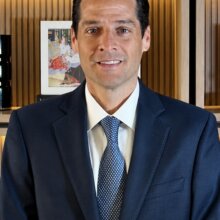
“You can buy chips. You can even buy talent. But you can’t buy strategic judgment.”
Michael Greenwald
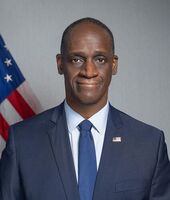
“You don’t have to be a builder of an AI infrastructure to partake and be successful in an intelligence economy. But you must be able to partake in it.”
Khadija Mustafa
“They have the capital, they have the energy, they have the passion, they have the national visions that would like to realize all of that. And they have the local talents that are interested.”
Ehab Elsonbaty
Key Takeaways
Sovereign AI goes beyond the older idea of data sovereignty to mean countries building their own AI infrastructure and capabilities, and shifting alliances, geopolitical unpredictability, and attacks on data centers are pushing nations to treat AI as a strategic national asset rather than a nice-to-have.
Mustafa described sovereignty as a spectrum, with the U.S. and China trying to control as much of the AI stack as possible yet still interdependent, countries like the UAE and Saudi Arabia positioning themselves as hosts for others, and most nations lacking the capital, energy, and scale to build everything themselves.
Middle and smaller nations have an opportunity to look outward and offer sovereignty to other countries, becoming a node in their AI ecosystems, with Mustafa citing Norway as a hypothetical example because of its renewable power, cool climate, and perceived neutrality, and Malaysia for its outward-looking, friendly environment.
Mustafa argued that most countries shouldn’t race to build frontier models, since the real sovereignty decisions sit further down the stack in power, grid capacity, water, connectivity, and critical minerals, and countries that sign away long-term power agreements without forecasting their own needs could end up constrained.
Greenwald said countries can buy energy, infrastructure, chips, and even talent, but not strategic judgment, and that AWS aims to make long-term local investments so that rural communities have the same access to foundational models as Fortune 500 companies.
Elsonbaty said Gulf sovereign wealth funds are investing aggressively in AI and are now building their own capabilities, drawing on capital, energy, national visions, and locally rooted talent educated abroad, while recent events in the region are making them ask who their real partners are when deciding what data can be processed elsewhere.
Greenwald closed by stressing a “builder mindset,” arguing that entrepreneurship can help countries without the largest grids or sovereign wealth funds create competitive AI ecosystems, since anyone with a novel idea can now build a business quickly using AI.
Action Items
Governments should treat their sovereign AI strategy as a portfolio that includes power, grid capacity, water, connectivity, critical minerals, and talent, not just models and GPUs.
Countries should forecast their own long-term energy and grid needs before signing long-term power agreements with external companies.
Middle and smaller nations should identify their comparative advantages and position themselves as hosts or hubs within other countries’ AI ecosystems.
Governments should classify their data and set clear policy frameworks for what can and cannot be processed outside their borders.
Countries should partner with global cloud providers and local companies to ensure broad access to foundational AI models, including in rural and underserved communities.
Governments should invest in workforce retraining and entrepreneurship to build a culture of AI builders.