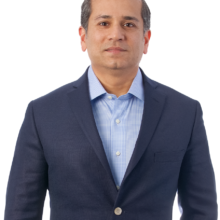
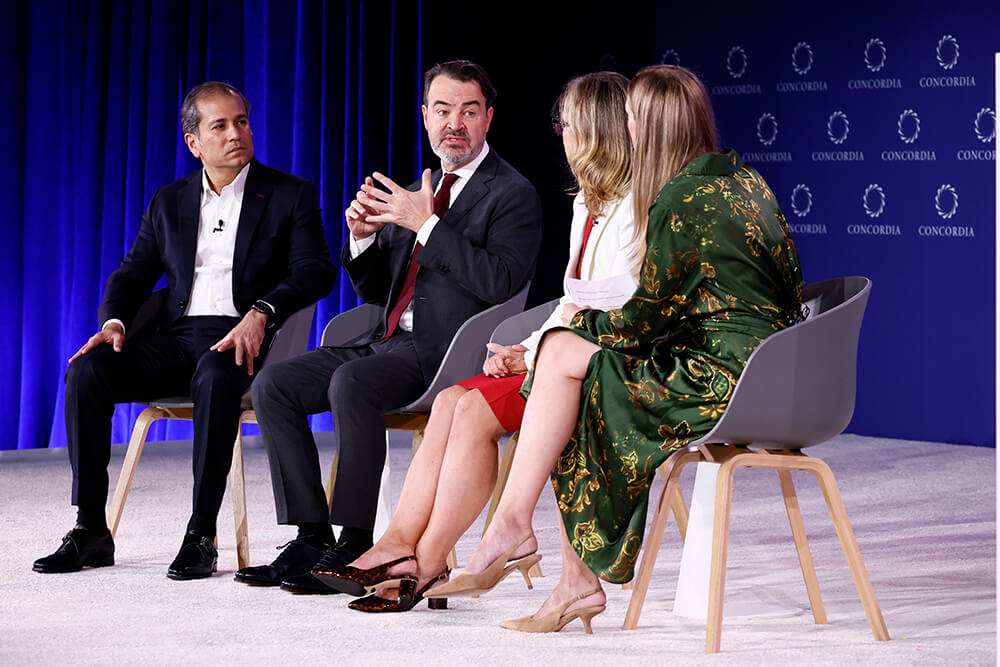
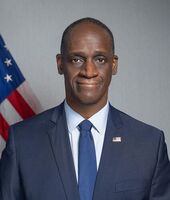
NEW YORK, NEW YORK – SEPTEMBER 22: (L-R) Shubham Singhal, Chair of the McKinsey Global Institute, Jerry Todd, Head of the NDD and Acting Head of Investment Strategy & Economic Insights Division at the Public Investment Fund, Whitney Baird, CEO of the US Council for International Business, and Hanne LeCount, Executive Director of Concordia, speak during the 2026 Concordia Annual Summit at Sheraton New York Times Square on September 22, 2026 in New York City. (Photo by Paul Morigi/Getty Images for Concordia Summit)
Important Quotations
“Global trade grew faster than the global economy, so the trade is not retreating.”
Shubham Singhal
“For those of you who wanna build, we’re ready to talk. For those of you who wanna buy, we’re building the things now that you can buy soon.”
Jerry Todd
“You always want a regulatory system that provides some certainty, but doesn’t keep the next thing from happening.”
Whitney Baird
“This is not a space for one country to figure out, one monolithic government entity to figure out… it takes that full cross-sector breaking down of silos at all levels.”
Hanne LeCount
Key Takeaways
Global trade is not retreating, since it grew faster than the global economy and new trade agreements are increasing, but it is rewiring geopolitically, with trade shifting toward politically aligned partners even as geographic distances grow, driven mainly by declining U.S.–China and EU–Russia flows, with ASEAN as the biggest winner so far.
About 25% of global trade is an “Achilles heel” for countries because it involves critical goods, concentrated sources, or geopolitically distant partners, and governments will act through industrial policy to secure areas like critical minerals and semiconductors, benefiting aligned suppliers such as Taiwan and South Korea.
The other 75% of trade is an open competition for investment, decided largely by speed and productivity, as seen in nuclear plants taking about six years to build in South Korea versus 17 to 19 years in the U.S., and AI and robotics may give the U.S. and Europe a chance to close the productivity gap with Asia.
Businesses crave predictability, and while multilateral institutions like the WTO need reform, they still quietly underpin much of global trade, though the failure to extend the e-commerce moratorium was a major disappointment and most momentum is now in regional and plurilateral agreements.
Todd described the world as “unpredictably predictable,” with a major shock roughly every 27 months, and argued that investors should not panic but instead focus on long-term resilience, citing Saudi Arabia’s growth in renewable power from 300 megawatts in 2020 to 17.8 gigawatts and ACWA Power’s rise from a $1.2 billion to roughly $35 billion valuation as a “resilience dividend.”
PIF acts as the first investor into new Saudi ecosystems to de-risk them, and it now has about 200 opportunities across sectors where U.S. companies are seen as key partners, especially in industrialization, services, and future-facing industries.
The AI build-out is a global investment super cycle that currently ties economies together, but it could split into separate U.S. and Chinese technology stacks, and unequal access to AI could compound into large productivity gaps between countries over time, with no multilateral forum yet in place to manage these tensions.
Action Items
Companies should map their supply chains against the “Achilles heel” criteria and diversify critical inputs toward geopolitically aligned partners.
The U.S. and Europe should speed up permitting and project delivery and invest in AI and robotics to strengthen their competitiveness for new investment.
Governments and business groups should push for WTO reform, including a permanent e-commerce moratorium, while pursuing regional and plurilateral trade agreements.
The U.S. government should take a leading role in multilateral AI dialogue, such as through the OECD, to set guardrails that provide certainty without stifling innovation.
U.S. companies and investors should engage with PIF’s pipeline of opportunities in Saudi Arabia, both to build and to invest in maturing assets.
Investors and governments should plan around long-term resilience rather than reacting to each disruption, while working to broaden access to AI so productivity gaps do not widen.