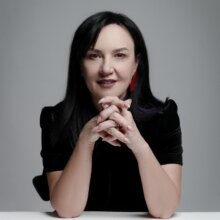
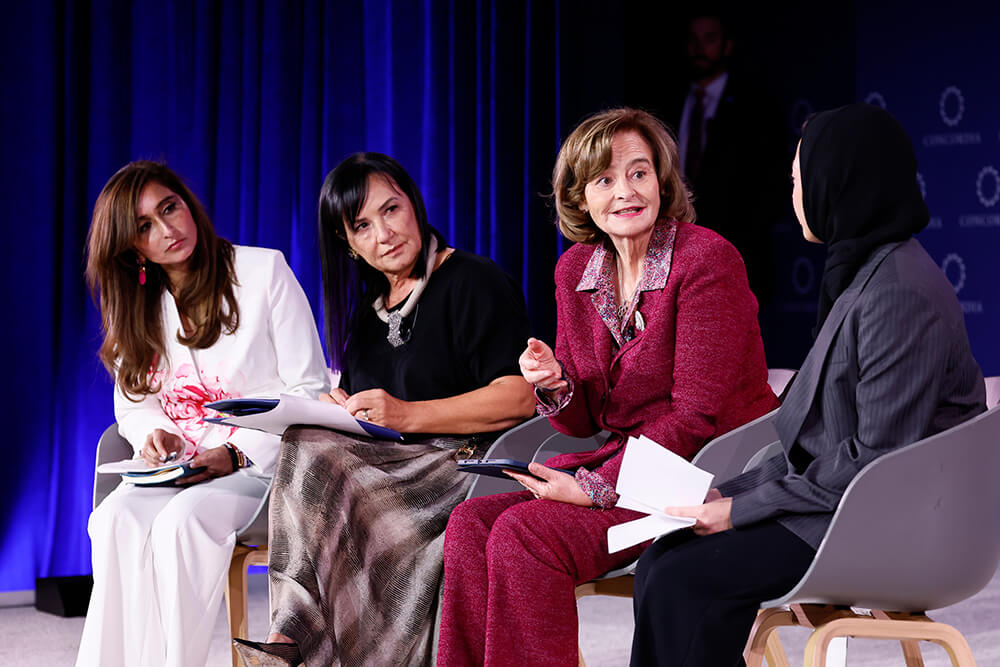
NEW YORK, NEW YORK – SEPTEMBER 22: (L-R) Shefali Razdan Duggal, U.S. Ambassador to the Netherlands, Linda Rama, Researcher and Civic Activist, Cherie Blair, Co-Founder & Chair of Omnia Strategy LLP, and Noor Al Thani, Youth Envoy for Qatar Debate, speak during the 2026 Concordia Annual Summit at Sheraton New York Times Square on September 22, 2026 in New York City. (Photo by Paul Morigi/Getty Images for Concordia Summit)
Important Quotations
“Mentorship is also so a young person or a person can look up and see that they have a pathway as well.”
Amb. Shefali Razdan Duggal
“The real test is not numbers but is the woman more economically independent, does she have more control over her own future and does she have the tools to adapt to whatever shocks and changes there will be.”
Cherie Blair
“Women are core to solutions being created and sustained.”
Noor Al Thani
“That is alliance woman to woman, I think, and you know this should never stop.”
Linda Rama
Key Takeaways
Blair said the real test of supporting women entrepreneurs is not helping them start a business in good times but equipping them to sustain and adapt it through shocks like pandemics, climate change, or war, through transferable skills, confidence, access to finance and markets, and strong networks, while recognizing that hard times also hit women at home.
She argued that success should be measured not by how many women are reached but by whether women are more economically independent and have more control over their own futures.
Duggal said one of the most important factors in sustaining women’s leadership is women supporting one another, while openly acknowledging that women are not monolithic and come from different backgrounds, as with her own experience as an immigrant raised by a single mother working two minimum-wage jobs.
Rama described how Blair helped her keep her job when her husband became Prime Minister of Albania and others assumed she had to give up her career, calling it an example of a woman-to-woman alliance that should never stop.
After five decades of communism, Albania had only seven women among 140 members of parliament in 1991 and none in the cabinet, and Rama credited the transformation since then to two alliances, civil society working with the UN and international institutions, and political leadership at home, including quotas.
Blair explained that a mentor gives advice while a sponsor uses their own influence to create opportunities, by promoting someone when they’re not in the room, suggesting them for roles, and taking a chance on them, citing male sponsors early in her legal career and later Hillary Clinton, who advised her to stay authentic rather than try to please people who would never be pleased.
Duggal added that mentorship can also mean simply being a visible example of what is possible, and told young women that, though unfair, they should assume they will need to work harder than men, as she did while working 90-hour weeks as ambassador, and can use that frustration as fuel.
Action Items
Programs supporting women entrepreneurs should focus on long-term resilience, including transferable skills, access to finance and markets, and networks, while accounting for women’s responsibilities at home.
Funders and organizations should measure success by women’s economic independence and control over their futures rather than by the number of women reached.
Institutions should build real sponsorship programs in which senior leaders actively advocate for women and recommend them for opportunities, rather than treating sponsorship as a box-ticking exercise.
Women leaders should mentor and sponsor others across different backgrounds and serve as visible role models for younger women.
Governments should pair political commitment, such as quotas, with partnerships with civil society and international institutions to expand women’s participation in public life.
Organizations should acknowledge the extra burden women often carry in reaching leadership roles and work actively to close that gap.