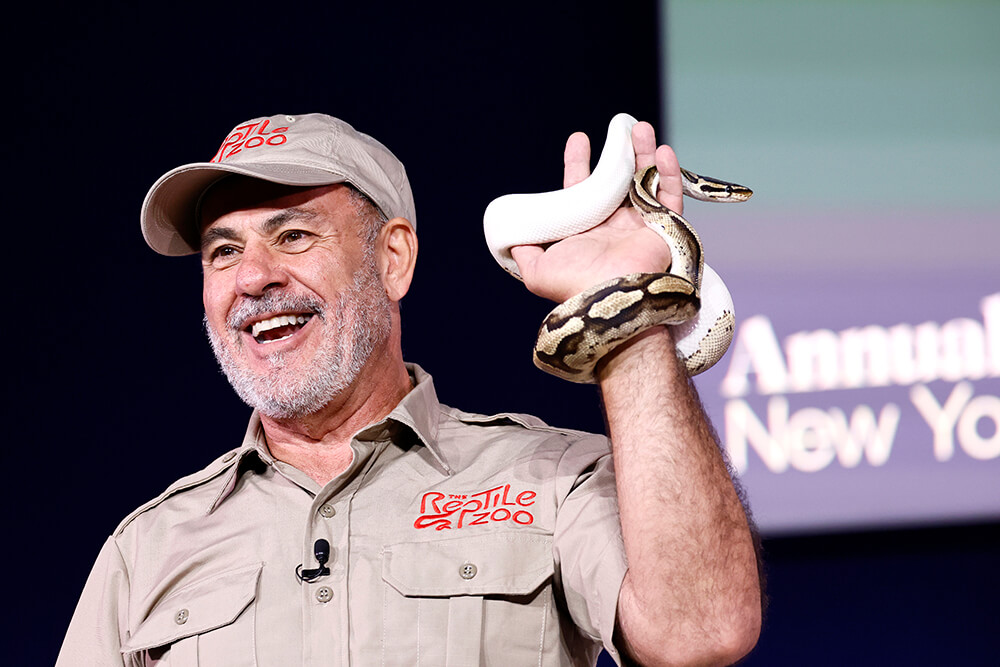
NEW YORK, NEW YORK – SEPTEMBER 21: Jay Brewer, Founder/CEO of Prehistoric Inc., speaks during the 2026 Concordia Annual Summit at Sheraton New York Times Square on September 21, 2026 in New York City. (Photo by Paul Morigi/Getty Images for Concordia Summit)
Important Quotations
“If you want to do something that’s never been done, you’re gonna have to do something that’s never been done.”
Jay Brewer
Key Takeaways
Brewer built a reptile business and an online following of about 70 to 75 million people from a childhood passion for animals, despite being adopted and orphaned young. His mother died when he was four and his father when he was 14.
He reframed his learning disabilities as a gift, because they taught him to find and build on “little wins.” He said people born at the top are expected always to succeed, which can make it harder for them to take risks.
His central message is that “behind fear is probably your win.” He clarified that he doesn’t mean risking your life, but stepping into the “danger zone” of possible failure, being caught off guard, or not having the answer.
He stressed that nobody achieves anything great alone. Friends, connections, and relationships, including with royal families who have visited his zoo, were key to his success.
He used Matilda, a ball python with a rare pattern, to make a point about uniqueness. He was involved with one of the first snakes of that type, which once sold for around $50,000 each. Everyone brings something special to the table, he said, but people are often the last to recognize it in themselves.
He showed entrepreneurial tenacity early, building a boat and starting a fishing business at 14. He rejected others’ claims about what he couldn’t do, defining tenacity as believing in something before it’s real enough to see.
He described a ripple effect from facing fears: one follower, inspired by his videos, held a snake, realized they could overcome their biggest fear, and went on to lose 200 pounds. He challenged the audience to name a fear they don’t want to admit and go after it.
Action Items
Identify one fear, personal or professional, and take a concrete step to face it.
Treat setbacks and differences, such as hardship or learning challenges, as potential strengths, and build confidence through small wins.
Invest deliberately in relationships and networks, since no one succeeds alone.
Build a career or business around a genuine passion, even if it seems unconventional.
Leaders should create safe spaces for teams to take risks and face discomfort, such as team-building experiences that push people out of their comfort zones.