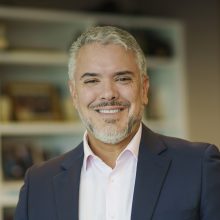
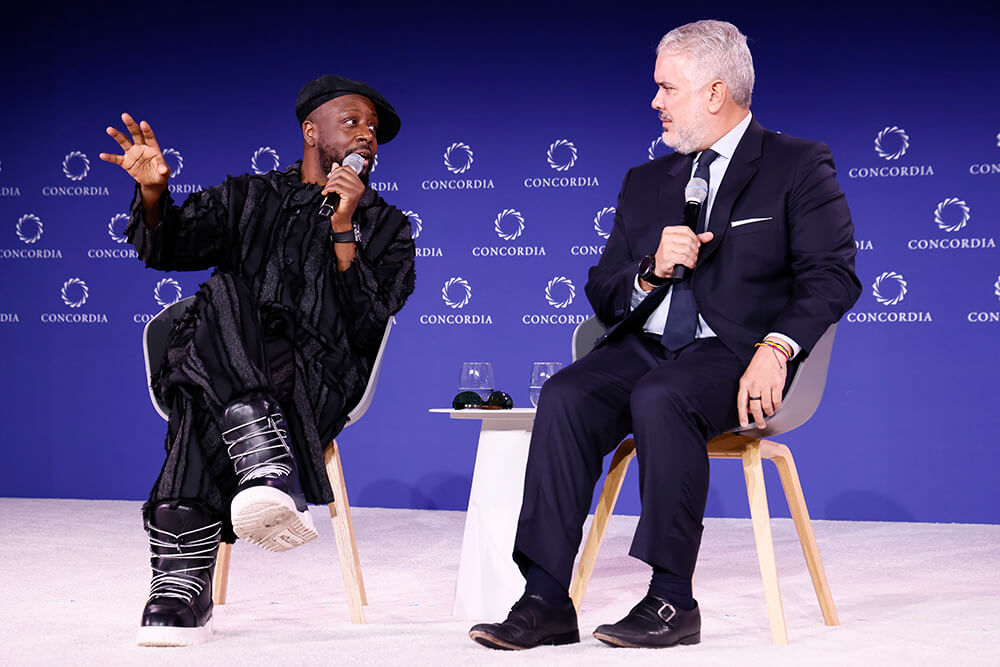
NEW YORK, NEW YORK – SEPTEMBER 21: (L-R) Wyclef Jean and Ivan Duque Márquez, Former President of Colombia, speak during the 2026 Concordia Annual Summit at Sheraton New York Times Square on September 21, 2026 in New York City. (Photo by Paul Morigi/Getty Images for Concordia Summit)
Important Quotations
“Big, big, big imagination. Big, big, big dream. Work, work hard and don’t ever look down at anyone that says that you can’t make it.”
Wyclef Jean
“How are we going to show that culture can transform a nation? And how if we empower talent, that talent becomes the best expression of human capital.”
H.E. Ivan Duque
Key Takeaways
Wyclef opened with a multilingual freestyle to make the point that AI cannot replace human creativity, since machine learning ultimately has to come from people, and as long as humans keep thinking and creating there is nothing to fear.
He described how the Fugees recorded “Killing Me Softly” in a New Jersey basement using equipment from a music junkyard because they couldn’t afford a real studio, calling it “coding before coding was coding” and an example of innovation born from culture and resourcefulness.
Wyclef is launching Carnaval, an immersive experience that combines food, culture, and live human interaction, designed as a place to discover talent the way artists like the Fugees, Lauryn Hill, and Beyoncé were discovered before they became famous.
In Haiti, Wyclef has spent about three years sponsoring young people in Jacmel who are building AI solutions for the environment and drone-based transportation, and he argued that with over 60% of the population young, Haiti needs opportunity rather than charity, supported by bipartisan policies and real enforcement of anti-corruption laws.
Collaboration across cultures creates lasting impact, as shown by Wyclef’s work with Shakira on “Hips Don’t Lie” and his earlier support for Duque’s orange economy initiative at the IDB, which promoted culture and creative talent as drivers of national development.
As an adviser to Google on AI music tools, Wyclef supports technology that makes music creation more accessible, including for young people and people with autism, but called for stronger encryption to protect copyrights and for holding AI companies accountable when they train on creators’ work without permission.
Both speakers agreed that music and sports programs can help prevent violence, with Wyclef urging governments and NGOs to direct more funding to rural communities where young people’s talents can be channeled toward positive paths.
Action Items
AI companies should license and compensate creators for any content used to train their models, and invest in technology that detects unauthorized use of copyrighted work.
Policymakers should strengthen intellectual property protections and hold companies accountable for training AI on pirated books, music, and other creative work.
Governments and NGOs should expand funding for music, sports, and prevention programs in rural communities across Latin America and the Caribbean.
Investors and partners should create opportunities for young Haitian innovators, while also amplifying their success stories rather than only reporting crises.
Haiti’s leaders and international partners should pursue bipartisan policies and enforce anti-corruption laws to create a stable environment for youth opportunity.
Cultural leaders and governments should support spaces and initiatives, such as Carnaval and orange economy programs, that help emerging talent be discovered and collaborate across countries.