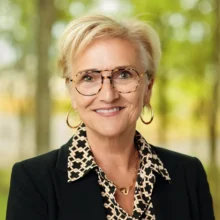
“When prediction comes together with action, revolutionary things are happening.”
Dr. Ann Aerts
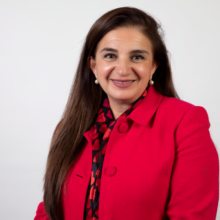
“This is the time for us to really, really be innovative, collaborative, friendly, trusting each other and moving forward towards improving human health... Shame on us if we don’t get this done.”
Dr. Roxana Mehran
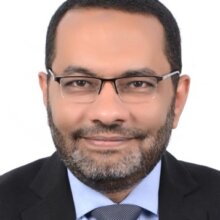
“We need to focus that all the regulation that we put would end finally and ultimately by the benefit of the patients. If not, all what we are speaking about is just hassle.”
Prof. Mohamed Hassany
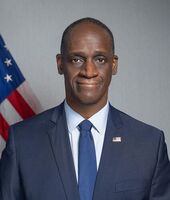
“AI is perhaps the biggest democratizer of technology we’ve seen in a generation. And it doesn’t matter how big the data set is. We don’t need to be afraid.”
John Kahan
“AI is not the intervention. AI is the intelligence layer.”
Daniella Foster
“It’s not an evidence gap... it’s an implementation gap.”
Lykke Schmidt
“We just need to think about using that right and implementing it rather than just saying, oh, this is kind of a cool thing on my app.”
Alice Park
Key Takeaways
The barrier to bending the cardiovascular curve isn’t scientific evidence but implementation. Cities and health systems already know the drivers and the interventions, yet they struggle to turn that knowledge into action.
Partnerships must be designed for execution rather than convening, and they must be anchored in public systems to reach scale.
Social determinants outweigh clinical factors. Zip code, commute time, socioeconomic status, education, and social isolation predict cardiovascular outcomes better than biomedical parameters, and up to 80% of health outcomes are shaped outside the healthcare system.
The AI for Healthy Cities initiative found consistent drivers across New York, Singapore, and Helsinki. In New York, a commute of 60 minutes or more was the top predictor of hypertension, and the root cause, time stress among people working multiple jobs, emerged only when the data was combined with ethnographic community research.
Women face a major gap in data and care. They have been excluded from clinical trials for decades of their lives, their symptoms are often dismissed as “atypical” or anxiety, and many don’t know that heart disease is their leading killer.
People typically learn their risk too late, often at the moment of a cardiac event. This makes the shift from a “sick care” to a “well care” model essential, and low-barrier tools like free AI-powered risk calculators can help reach people earlier.
AI is best understood as an intelligence layer rather than the intervention itself. Its value lies in precisely allocating scarce clinical resources, for example through New York’s census-tract mapping of local cardiovascular drivers, which replaces blanket approaches.
Egypt’s hepatitis C elimination campaign shows how mass screening can be used to detect hidden NCDs. Cardiovascular disease is harder to fund, though, because it involves multiple risk factors and requires long-term financing rather than a single, finite campaign.
Responsible data use needs a strong governance framework that addresses data sovereignty, fragmentation, quality, and minimal collection. That framework must be oriented to patient benefit and build mutual trust between providers and patients.
Clinician burnout and declining patient trust in health information are threats to progress. Technology must reduce the workforce burden rather than add to it.
Implementation remains too slow. One Copenhagen community took a year to generate evidence and eight years to build coalitions before diabetes incidence fell, and AI could accelerate real-time learning and course correction.
Action Items
Expand the Cardio for Cities model and population health intelligence to more cities, building on the recent New York rollout.
Establish dedicated implementation entities in each city, apolitical where possible, with a clear mandate, funding, staff, delivery plans, and measurable targets.
Combine health system data with social, economic, and environmental data, plus qualitative community research, to produce neighborhood-level intelligence that can guide resource allocation.
Prioritize closing the data gap on women’s cardiovascular health by including women in clinical trials and training clinicians to recognize symptoms that present differently in women.
Scale free, accessible risk-assessment tools and deliver them where people live, work, and worship, including through faith communities and the media channels people already use.
Develop national data governance and privacy laws that enable AI use while protecting data sovereignty, minimizing data collection, and ensuring patient benefit.
Use AI and real-time analytics to accelerate implementation cycles so that programs can test, learn, and course-correct far faster than current timelines allow.
Build disaggregated data systems, by sex and by district, so governments can prioritize interventions and make the economic case for health as an investment.
Embed cardiovascular risk screening into existing primary care and public health programs, following Egypt’s approach of piggybacking NCD detection onto other screening efforts.
Address mental health, stress, and social isolation as recognized cardiovascular risk factors within prevention programs.
Convene a group of cities to report back at next year’s UN General Assembly with measurable outcome improvements, showing a move from risk identification to prevention and control while preserving local ownership.